
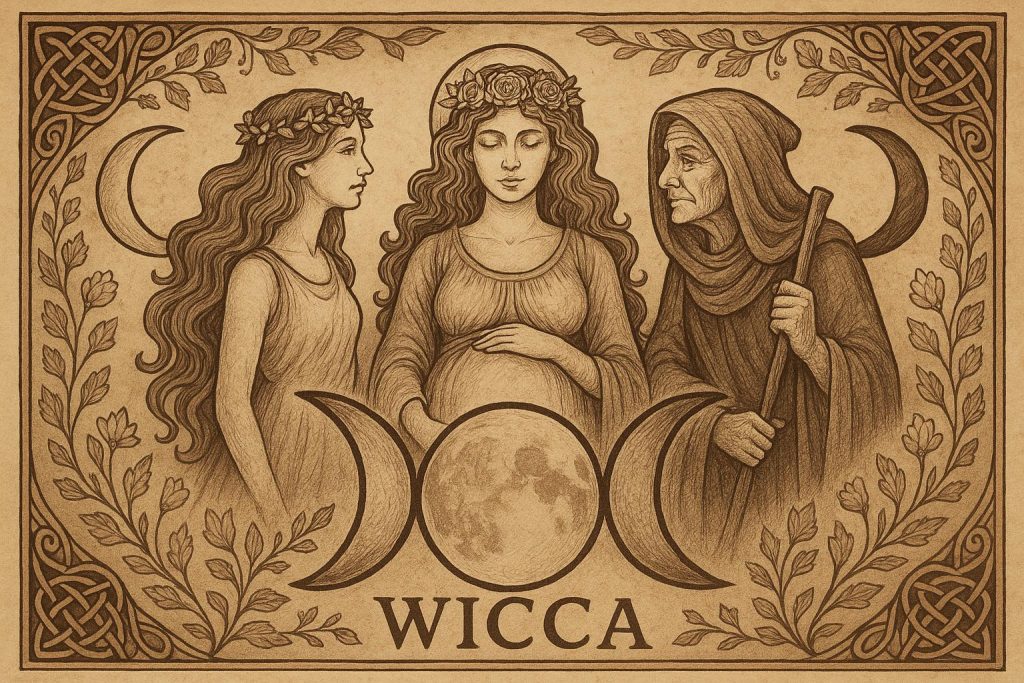
Understanding the Triple Goddess in Wicca
The concept of the Triple Goddess is foundational to the Wiccan belief system, representing a central element of its spirituality. As a modern Pagan religion, Wicca draws heavily from pre-Christian traditions, integrating them with contemporary spiritual practices. The Triple Goddess is viewed as a singular entity with three distinct aspects, each symbolizing different phases of life and nature. This triadic deity not only represents the feminine divine but also illustrates the cyclic patterns prevalent in nature and human life.
The Three Aspects of the Triple Goddess
In the Wiccan tradition, the Triple Goddess is manifested through three primary aspects: the Maiden, the Mother, and the Crone. Each aspect reflects a stage in the life cycle and a phase of the moon. Together, they represent a holistic and dynamic picture of the female experience, offering guidance and insight into life’s transitions and rites of passage.
The Maiden
The Maiden aspect signifies youth, purity, and new beginnings. She is associated with the waxing moon, embodying potential and anticipation. In the context of nature, the Maiden correlates with springtime, a period of renewal and growth. Traditionally, this phase signifies a time of innocence and discovery, where possibilities are limitless. Wiccans may invoke the Maiden during rituals focused on beginnings, such as initiating projects or starting new ventures. The Maiden’s energy is often seen as vibrant and adventurous, representing the curiosity and wonder of life unfolding before the individual.
The Mother
Representing fertility, fruition, and nurturing, the Mother aspect is linked to the full moon. This phase of the Triple Goddess is often seen as embodying adulthood, responsibility, and the culmination of efforts. In nature, this aspect is equivalent to the summer when the earth is abundant and crops reach maturity. The Mother symbolizes not only biological motherhood but all forms of creativity and problem-solving. Her essence is about caring, providing sustenance, and ensuring the continuity of life. Rituals invoking the Mother often center around themes of creation, abundance, and caregiving for others, and they might include activities such as harvest celebrations or nurturing new ideas.
The Crone
The Crone aspect symbolizes wisdom, transformation, and the end of cycles. Associated with the waning moon, the Crone represents the later stages of life and the knowledge gained through experience. In the seasonal calendar, the Crone corresponds to autumn and winter, times of reflection and preparation for renewal. The Crone teaches the valuable lessons of letting go and preparing for death and rebirth, which is an integral part of the natural cycle. Wiccans may seek the Crone’s guidance for insights, letting go of the past, or during transformative phases. Her rites may include closure ceremonies, meditation on past experiences, or making decisions that lead to significant change.
Symbolism and Worship
Wiccans may express their devotion to the Triple Goddess through rituals, ceremonies, and personal meditation. The phases of the moon serve as a foundational element, with many Wiccans timing their practices to align with the lunar cycle. It is common to use symbols, such as the triple moon icon, which represents the waxing, full, and waning phases, to honor the Goddess. These symbols serve as a constant reminder of the Goddess’s presence and influence over life’s processes.
Wiccans may create altars featuring representations of the Maiden, Mother, and Crone, or employ specific colors and materials that resonate with each aspect’s attributes. For example, white, red, and black are colors often associated with the Maiden, Mother, and Crone, respectively. Candles, chalices, or sacred herbs may also be used to evoke the energy of each goddess aspect during rituals.
The Triple Goddess in Modern Wicca
In contemporary Wicca, the Triple Goddess remains a powerful symbol of feminine divinity and the cyclical nature of life. She represents a continuous journey of growth, sustainability, and change, underscoring the interconnectedness of human life and nature. This modern interpretation emphasizes empowerment and connectivity with the divine feminine in all its forms.
In modern practice, Wiccans take inspiration from the Triple Goddess to explore gender dynamics, challenge stereotypes, and foster inclusivity within their spiritual communities. She serves as a model for embracing diversity and honoring individual and collective journeys. For more details on spiritual practices and modern interpretations of the Triple Goddess, various resources are available online, including scholarly articles, books, and specialized websites. Such resources offer insights into how the Goddess’s role is viewed in different Wiccan traditions, from solitary practitioners to larger covens, each adding their unique approach to her worship.
The embracing of the Triple Goddess in Wicca exemplifies a desire to connect with ancient wisdom and incorporate it into modern spiritual frameworks. As practitioners honor each phase of the Goddess, they simultaneously acknowledge the diverse and evolving nature of their spiritual journeys. The Goddess serves as a guide through life’s transitions, representing birth, growth, death, and renewal, and encouraging Wiccans to find balance and harmony in the cyclical patterns of life.
Understanding these principles enriches Wiccan spiritual practices, and by embracing each phase of the Triple Goddess, practitioners cultivate deeper self-awareness, resilience, and a harmonious relationship with the world. Thus, the Triple Goddess stands as a timeless symbol of life’s ever-turning wheel, guiding followers through exploration, sustenance, and transformation.