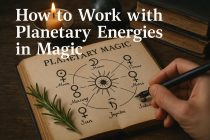
How to work with planetary energies in magic.

Understanding Planetary Energies

In the realm of magic, planetary energies serve as the fundamental qualities and influences associated with each celestial body in our solar system. Practitioners of magic often use these energies to synchronize their practices with the specific attributes connected to each planet. By comprehending these energies, magical work becomes significantly enhanced, fostering more effective rituals and spell outcomes.

The Attributes of Each Planet

Every planet is traditionally believed to embody distinct characteristics that exert influence over various dimensions of human life. This, in turn, informs the way in which magic practitioners align their activities with celestial energies.

Sun: The Sun is emblematic of vitality, leadership, and success. It represents power and the capacity for self-expression. In magical practices, the Sun’s energy can be drawn upon when aiming to boost one’s vitality or to cultivate leadership qualities.

Moon: The Moon holds dominion over the realm of emotions, intuition, and the subconscious. It is intimately linked to cycles, such as the lunar phases, which influence tides and emotions alike. Practitioners may invoke lunar energy to enhance dreams, psychic abilities, and self-reflection.

Mars: Regarded as a symbol of action, courage, and passion, Mars is often associated with boldness and aggression. Harnessing its energy can be especially productive in situations that require assertion and determination.

Venus: Venus reflects love, beauty, and harmony. It governs the spheres of relationships and artistic endeavors. Those seeking to improve personal relationships or enhance aesthetic undertakings often look to Venusian energies to guide their efforts.

Mercury: As the ruler of communication, intellect, and adaptability, Mercury facilitates effective verbal and written exchanges. Its influence extends to travel and technology, making it essential for activities requiring mental acuity and technological fluency.

Using Planetary Days

An effective practice for harnessing planetary energies involves the concept of planetary days. Each day of the week is aligned with a particular planet, providing a dedicated timeframe for focusing on the specific qualities of that planet.

Sunday: Governed by the Sun, activities related to enhancing personal growth, vitality, and health find particular favor. Engaging in practices designed to strengthen self-expression or augment confidence can also be incredibly beneficial on Sundays.

Monday: Controlled by the Moon, Mondays are ideal for any work that delves into dreams and emotional healing. It’s a day suited for introspection, meditation, and activities that promote mental and emotional wellness.

Tuesday: Mars rules Tuesday, making it an auspicious moment for initiations, assertiveness, and activities that have a competitive edge. This alignment supports the pursuit of courage and determination in various initiatives.

Determining Planetary Hours

In addition to planetary days, practitioners often utilize planetary hours to fine-tune the timing of their magical work. This method involves dividing each day into segments that are governed by different celestial bodies, influencing the energies present during those periods. By synchronizing activities with these hours, practitioners can further tailor their magical endeavors to correspond with desired outcomes, thus optimizing the efficacy of their work.

Creating Planetary Talismans

The crafting of planetary talismans represents another dimension of working with celestial energies. These talismans are typically inscribed with symbols or words that resonate with the properties of a specific planet. They serve as focal points for intent, acting as conduits that channel and harness the energetic attributes of the chosen planet.

Materials such as metals or gemstones attributed to the respective planet can be incorporated into the creation of talismans, amplifying their inherent power. For example, gold is often associated with the Sun, while silver is commonly linked to the Moon. The careful selection of these materials is crucial, as it intensifies the talisman’s ability to connect with the targeted planetary energy.

In the cosmology of magical practices, planetary energies offer a profound framework for practitioners to work within, providing structure and clarity. By immersing oneself in this multidimensional understanding, an individual can significantly enrich their magical repertoire, expanding their capacity to affect change in accordance with celestial forces.

For those interested in delving deeper into planetary energies and their application, a wealth of resources is available through various online communities devoted to the exploration of magical practices. Engaging with these resources can deepen one’s understanding and mastery of these time-honored correspondences, potentially yielding quite transformative effects in one’s magical and personal life.

The importance of numerology in the occult.

The Role of Numerology in the Occult

Numerology, a system that assigns mystical significance to numbers, plays a crucial role in various occult practices. While often associated with divinatory traditions, its influence extends to numerous realms of esoteric thought and belief.

The Historical Context of Numerology

Dating back to ancient civilizations, numerology has been an integral part of the human quest to understand the universe and its hidden meanings. Pythagoras, the Greek mathematician and philosopher, is frequently credited with developing foundational concepts in numerology. His belief that the world could be understood through numbers laid the groundwork for later numerological systems.

In the occult context, numerology’s application and interpretation have evolved over centuries. Its systems form part of a diverse range of practices, including astrology, alchemy, and tarot reading.

Numerology and Symbolism

Numbers in numerology are not simply quantitative markers; they also hold significant symbolic meanings. For example, the number seven is often associated with spiritual awakening and introspection, while the number four may symbolize stability and order. Such interpretations can vary widely depending on the specific numerological tradition or the practitioner’s personal beliefs.

This symbolic nature is why numerology often plays a critical role in rituals and ceremonial magic within the occult. Practitioners might choose ritual dates, times, or even words assigned to specific numbers that align with their desired outcomes or goals.

Numerology in Divination

In the realm of divination, numerology is used to gain insight into individuals’ lives, relationships, and potential future events. This practice often involves the analysis of birth dates, names, and other personal identifiers transformed into numbers.

Those numbers are then interpreted to provide guidance or understanding of life’s patterns and challenges. Despite its esoteric nature, numerology finds a dedicated following, illustrating its enduring relevance in the occult.

Numerology and the Occult Philosophy

The practice of numerology is deeply entwined with occult philosophies, which often regard the universe as imbued with hidden meanings accessible through esoteric knowledge. Numbers, from this perspective, are more than abstract truths; they serve as keys to unlocking the cosmic principles underlying material reality.

Occultists may use numerological analysis to reveal deeper truths about the universe, seeking alignment with these truths to enhance their spiritual growth or manifest particular outcomes. Consequently, the study of numerology is not only an intellectual pursuit but also a spiritual endeavor.

Numerology’s Intersection with Other Occult Practices

In many traditions, numerology intersects intimately with other occult practices. For example, in astrology, numbers derived from birth charts can offer additional insights into a person’s character and destiny. Astro-numerology combines these elements to provide a more layered understanding of an individual’s life journey.

Similarly, in tarot reading, numerological insights can amplify the meaning of particular tarot spreads. Each card is associated with a number, and understanding these numerological correspondences can enhance the reading and bring further depth to the interpretation of the spread. Thus, numerology complements and enriches the practice of reading tarot cards by offering an added analytical layer.

The Role of Numerology in Personal Development

Furthermore, beyond divination, numerology is often harnessed for personal development. Practitioners believe that by understanding their unique numerical makeup, they can uncover strengths and weaknesses, thus empowering them to make informed life choices. Life path numbers, derived from birth dates, are particularly emphasized for insights into one’s persona and life objectives.

Additionally, personal numerology can guide individuals in choosing suitable career paths, partners, and life goals. By resonating with their inherent numerical energies, individuals strive for a life of harmony and fulfillment, aligned with their numerical blueprint.

Challenges and Criticisms

Critics of numerology often cite its esoteric foundations as lacking empirical support or scientific validation. Despite this, its proponents argue that numerology offers a symbolic framework for understanding personal existence and universal interconnectedness.

The lack of empirical validation does not deter those who find value in its philosophical and spiritual insights. Numerology serves as a bridge connecting observed realities with metaphysical doctrines, offering an interpretative framework that continues to be an integral part of occult studies.

Numerology in Modern Times

In modern times, numerology retains its allure and relevance, especially as more people seek spiritual and alternative methods for self-discovery and understanding of the universe. Online resources and communities dedicated to numerology have proliferated, making it more accessible to a broader audience.

Digital platforms offer tools for generating numerological charts and reports, democratizing access to numerological insights and furthering its reach. As people increasingly explore numerology, its application continues to evolve, adapting to contemporary contexts while preserving its ancient wisdom.

Conclusion

The continuing popularity and application of numerology within the occult reflect a persistent human inclination to seek meaning beyond the tangible world. This ancient practice remains an enduring bridge between the known and the unknown, offering insights that intersect with spirituality, self-awareness, and cosmic understanding. For those interested in delving deeper into numerology’s role within the occult, numerous resources and texts are available. Exploring these can provide a richer understanding of how this ancient practice continues to influence modern esoteric traditions.

The use of sigils in magical practices.

The Concept of Sigils in Magical Practices

Sigils are intriguing symbols employed in magical practices, serving as powerful tools designed to manifest specific intentions or desires. These symbols are usually crafted by individuals, allowing them to harness their focus and energy towards achieving a particular goal. By understanding sigils’ origins and applications, one gains valuable insight into their role across numerous magical traditions.

Historical Background

The use of sigils is deeply rooted in ancient traditions, with evidence of their application found in numerous cultures across the globe. Historically, sigils have been closely associated with ceremonial magic. In these settings, practitioners meticulously designed symbols to invoke deities or summon spirits, utilizing sigils as a means of bridging the gap between the earthly and spiritual realms. This historical lineage of sigils demonstrates their transformative role throughout time, influencing both historical and contemporary magical practices.

As sigils transitioned through various cultural settings, they evolved in both form and purpose. In early Western esoteric traditions, for instance, sigils often held complex, symbolic meanings, incorporating elements such as geometric shapes or astrological symbols to enhance their efficacy. This meticulous blend of artistry and symbolism highlights sigils’ significance and their capacity to encapsulate intricate intentions within a single visual construct.

Modern Application

In contemporary magical practices, sigils have gained prominence as versatile tools for personal development and spiritual growth. They are especially prevalent in chaos magic, a modern magical approach that adopts a pragmatic stance toward belief systems. Unlike traditional frameworks, chaos magic advocates the flexibility of belief, empowering practitioners to experiment with diverse methodologies in achieving personal goals.

Creating a sigil generally involves distilling a clear statement of intent into a unique symbol. This process often demands creativity and intuition, as the practitioner abstracts a written intention into a visual form. Upon crafting the sigil, the practitioner must then imbue it with their energy and focused subconscious attention, a crucial step in activating its potential to influence the outcome.

Steps in Sigil Creation

To effectively create a sigil, practitioners generally adhere to a series of well-defined steps, ensuring a structured approach to harnessing one’s intentions:

Formulate Your Intent: The initial step necessitates a clear articulation of one’s desired outcome. It is critical to frame the intention as a positive and concise statement, leaving no room for ambiguity.

Design the Sigil: After establishing a clear intent, the next stage involves transforming this statement into a visual symbol. Various methodologies exist for this transformation, one common technique entails the elimination of vowels and repeated letters within the statement. The remaining letters are then rearranged and stylized into a coherent, personalized design.

Charge the Sigil: To imbue the sigil with the necessary energy, practitioners engage in practices such as meditation, visualization, or ritualistic activities. The goal here is to concentrate one’s mental and spiritual energy onto the sigil, allowing it to serve as a vessel for the practitioner’s aspirations.

Release and Forget: Following the charging process, practitioners are advised to consciously forget the sigil. This step allows the subconscious mind to operate uninhibitedly, directing energy towards the intended goal without the distraction of conscious interference.

Practical Considerations

The efficacy of sigil magic is closely linked to the practitioner’s level of discipline and focus. It is paramount that one approaches the practice with clarity of intent and specificity in design. Additionally, tailoring the charging process to one’s personal beliefs or traditions can enhance the sigil’s overall effectiveness. This augmentation not only fosters a deeper connection between the practitioner and their creations but also reflects the inherently personal and subjective nature of sigil work.

Individual practitioners often introduce unique elements into their sigil practices, incorporating influences from a range of traditions and belief systems. The adaptability of sigils makes them particularly appealing, offering a rich landscape for customization and experimentation while maintaining a core focus on intention and energy.

Further Exploration

For those keen on delving deeper into the world of sigils, there exists a myriad of resources that explore both traditional and contemporary magical practices. From comprehensive texts penned by seasoned practitioners to accessible online forums, the wealth of information available caters to a diverse range of interests and experience levels.

Reading materials often provide step-by-step guidelines, historical analyses, and personal anecdotes, helping newcomers and experienced practitioners alike enhance their understanding and use of sigils. Many seasoned practitioners generously share their experiences and insights across online platforms, offering guidance and support to those exploring sigils for the first time.

To further enrich one’s exploration, consider pursuing literature authored by individuals well-versed in esoteric practices, whether focusing on esoteric studies or more broadly on occult practices. Such sources can significantly augment one’s appreciation of the nuanced traditions and methodologies underpinning the use of sigils.

Integration into Modern Life

Incorporating sigils into modern life requires a mindful approach, aligning with personal goals and spiritual practices. In addition to traditional uses, sigils can be creatively integrated into daily routines, functioning as reminders or motivators. Simple adaptations, such as rendering a sigil as a piece of wearable art or embedding it within personal spaces, weave magic into the fabric of everyday life, facilitating an ongoing connection to one’s intentions.

By including sigils in creative expressions like art, design, or even digital media, one can resonate with the essence of their intentions in seemingly mundane contexts. This fusion extends the reach of sigils beyond the realm of the esoteric, offering new avenues for practical and experiential engagement.

Ultimately, the journey with sigils is deeply personal and ever-evolving. Practitioners should allow space for growth and reflection within their practices, seeking inspiration and understanding across a range of disciplines and traditions. Through continued exploration and openness to learning, individuals can unlock the transformative potential of sigils in both magical and mundane realms.

How to connect with spirit guides through scrying.

Understanding Spirit Guides

Connecting with spirit guides involves delving into practices found in numerous spiritual traditions worldwide. These mystical entities are considered non-physical beings or energies who provide guidance, wisdom, and insight. Engaging with them often takes us into a deeper understanding of ourselves and our surroundings, offering a unique perspective that can enhance our life’s decisions and experiences. Among the various methods to engage with spirit guides, scrying stands out as a popular practice for facilitating enhanced communication with these ethereal beings by utilizing reflective surfaces to transcend the visible reality.

What is Scrying?

Scrying, an age-old practice, has been employed by numerous cultures as a means to gain insight, foresight, and deeper metaphysical understanding. It involves gazing into reflective surfaces such as water, mirrors, and crystals. This method serves as a gateway to portal-like experiences where one may access messages or visions from spiritual realms beyond ordinary perception. As a form of divination, scrying allows individuals to transcend the mundane and connect with higher wisdom and spirits, including their personal guides. This pursuit of knowledge and guidance is steeped in tradition and enveloped in a rich history of spiritual exploration and discovery.

Preparing for Scrying

As an intricate practice, scrying requires more than just a physical setup; it necessitates mental and emotional readiness. Choosing a serene location free from disturbances is crucial to cultivate the focus needed for effective scrying. This tranquility aids not only in concentration but also in nurturing the mental space essential for profound engagement with the practice. Adjusting the lighting to a dim ambiance, potentially using candles, can further enhance the environment by creating a soothing and reflective atmosphere. Ensuring that the chosen reflective surface is immaculate is equally important, as any distractions could hinder the experience, thereby obstructing the path to genuine insight and connection.

Setting Intentions

The process of setting intentions is foundational to commencing any scrying session. Clearly articulating the purpose of the session can significantly impact the quality and focus of the engagement. Whether the objective is to seek guidance on a specific issue, gain broad insight, or cultivate a robust connection with spirit guides, the clarity of intention can act as a beacon, guiding the session toward meaningful revelations. Some practitioners might choose to verbalize their intentions aloud, solidifying the purpose in the physical realm, while others may opt for silent contemplation, trusting the universe to perceive the essence of their desires.

The Scrying Process

Understanding the scrying process enables an individual to harness its full potential effectively. Here’s a detailed exploration of each stage:

Relaxation: Begin the session by assuming a comfortable position, allowing your body to ease into tranquility. Deep breathing can aid in releasing tension, bringing both mind and body into a state of peace, prepared for introspection.

Focus: Direct your gaze softly onto the chosen reflective surface. It’s essential to let your eyes relax, maintaining a gentle and open focus rather than straining to see. This relaxed gaze facilitates receptivity to subtle energies and messages.

Opening the Mind: As you continue to gaze, stay open to any spontaneous thoughts, images, or emotions that emerge. This stage invites a receptive state of mind where observation supersedes control. It is through this willingness to witness without preconceiving that clarity often arises.

Engagement with Spirit Guides: Throughout the process, remain open to the presence and communication of your spirit guides. They may convey messages through visual impressions or intuitive sensations. Trust in the authenticity of these encounters, even if they deviate from expectation. It is often in unexpected forms that profound messages are revealed.

After the Session

Concluding a scrying session does not mark the end of the experience but rather the beginning of integrating new insights. Take some time to quietly reflect on the session, contemplating any images, symbols, or feelings encountered. Recording these elements in a journal can help crystalize the experiences, serving as a reference for later analysis. This reflective process often uncovers deeper meanings embedded within the messages received from spirit guides. By consistently analyzing these experiences, one can refine their understanding and appreciation of spiritual guidance.

Consistency and Practice

Developing the ability to connect with spirit guides through scrying is a journey requiring patience, practice, and consistency. Regular engagement in scrying sessions gradually enhances intuitive abilities, enabling smoother and more effective communication with the unseen realms. Much like any skill, the insights and proficiency gained from scrying are built with each session, cultivating a more profound spiritual connection.

Further Learning

For those seeking to deepen their understanding of scrying and other spiritual practices, exploring reputable sources is invaluable. Online communities and libraries offer a wealth of information, facilitating expanded knowledge and exploration. As an example, visiting dedicated spiritual websites such as ‘Your Paranormal Resource‘ can offer a vast array of articles and resources covering an array of related topics. Engaging with these additional materials supports the ongoing journey of spiritual exploration and personal growth.

Embarking on the journey with spirit guides is a deeply personal and evolving experience. Through time, patience, and persistence, scrying can develop into a vital tool for spiritual exploration and guidance. Engaging with these spiritual practices opens pathways not only for understanding but also for connecting to the richness beyond the physical world, enriching one’s life journey with profound insights and meaningful direction.

The role of familiars in Wicca and the occult.

Understanding Familiars in Wicca and the Occult

In the world of Wicca and the occult, the concept of familiars holds a significant place. Familiars are often considered companions or spiritual entities that assist practitioners in their magical endeavors. Although the idea of familiars is not exclusive to Wicca, it is a tradition that has been embraced and reinterpreted over time. The understanding and utilization of familiars vary among practitioners, adding to the rich tapestry of practices within Wicca and the broader occult community.

The Origins of Familiars

Familiars have their roots in European folklore and witchcraft. Historically, they were believed to be supernatural entities in the form of animals that aided witches in their practices. Common forms included cats, dogs, birds, and reptiles. These entities were thought to possess mystical powers that could assist with spellcasting and divination. The presence of familiars in folklore often carried a dual narrative; they were seen both as loyal companions and as figures of suspicion and fear by those outside the traditions of witchcraft.

The historical narrative around familiars can be traced back to the witch trials of the early modern period, where accused witches were often said to have animal companions, considered demonic entities. This inclusion in trial narratives reflects the blending of cultural storytelling, fear, and misunderstanding of pagan practices and animal symbolism. The familiar as a witch’s companion often paved the way for broader demonization of natural and paganistic practices, seen through the lens of Christian Europe.

Role of Familiars in Wicca

In Wiccan practice, familiars are seen as more than just magical aides. They are considered spiritual partners that enhance a witch’s connection to nature and the spiritual world. Unlike traditional witchcraft, where familiars might have been seen purely as tools, in Wicca, they are treated with respect and appreciation for their individuality and spiritual presence. This perspective aligns with the Wiccan principles of immanence and interconnectedness, where every entity, living or spirit, is seen as part of the divine.

Wiccans often seek to establish a reciprocal relationship with their familiars, nurturing a connection that fosters mutual benefit and respect. This relationship can enhance rituals and spellwork by amplifying energies and acting as conduits between the physical and spiritual planes. In this role, familiars are more akin to co-practitioners, integral to a Wiccan’s spiritual journey.

How Familiars Assist Practitioners

Familiars can assist Wiccans in various ways. They may help focus energy, offer protection, and enhance the practitioner’s intuition. Some believe that familiars can even provide guidance from the spiritual realm, aiding in decision-making and personal growth. Familiars might communicate through intuition, subtle signs, or during meditative states, guiding practitioners through their spiritual challenges and endeavors.

The protective role of familiars is highly valued, as they are believed to guard against negative energies or entities. In practice, a familiar may act as a filter or shield when practitioners engage in rituals or meditate, fostering a sense of safety and balance. The mere presence of a familiar during such activities is also considered empowering, reinforcing the practitioner’s focus and connection to the ritual.

Beyond protection and guidance, familiars can enhance a practitioner’s empathetic abilities and connection to empathy. By studying the behavior and subtle cues of their animal familiar, practitioners can deepen their understanding of natural cycles and energies in the world around them.

Modern Interpretations and Practices

Today, the role of familiars in Wiccan practice has evolved beyond mere animal companions. Some practitioners believe familiars can be spirits without physical forms, serving as guides or protectors. Others consider family pets to hold the role of a familiar, assisting in spiritual practices and providing comfort and companionship.

The interpretation of a familiar as a spirit guide is particularly resonant in modern Wiccan practices that incorporate elements of shamanism or other forms of animism. These practices recognize the possibility of spirits manifesting in various ways, not limited to the physical realm. Such interpretations allow a broader understanding of familiars, expanding possibilities for learning and growth within Wicca.

Similarly, the mundane companionship offered by family pets can provide profound spiritual support. Pets that share daily life with practitioners may naturally absorb and participate in the ritual energies of their humans, acting as passive familiar presences. Practitioners looking to strengthen the familiar bond with their pets often do so through rituals designed to honor and recognize the spiritual connection inherent within everyday relationships.

For those interested in further exploring the role of familiars in Wicca and the occult, numerous resources and communities offer deeper insights. Engaging with such resources can provide a richer understanding and appreciation for these unique spiritual relationships. Resources include books on Wicca and practical magic, online forums, and community circles, where practitioners share experiences and offer guidance on working with familiars.

In conclusion, familiars hold a multi-faceted role in Wicca and the occult, acting as bridges to the spiritual world while supporting the practitioner’s magical journey. As perceptions and practices regarding familiars continue to evolve, they remain an integral part of many contemporary magical traditions. This adaptability and evolution ensure that familiars continue to serve as invaluable allies, offering wisdom, protection, and companionship on the spiritual path.

The significance of sacred texts in occult traditions.

The Role of Sacred Texts in Occult Traditions

Sacred texts occupy a pivotal role in the framework of occult traditions. These texts provide a foundation for understanding the esoteric principles and teachings that underpin various practices and beliefs. Such documents are often considered to be repositories of hidden knowledge, illuminating the paths of spiritual seekers with insights that are both mystical and philosophical.

Historical Context and Development

Throughout history, sacred texts have served as invaluable resources integral to various occult traditions. These writings have been instrumental in shaping practices, beliefs, and the overall spiritual framework of such traditions. Texts like the Sefer Yetzirah in the Jewish Kabbalistic tradition, the Hermetica in Hermetic systems, and the Book of Shadows in Wicca represent just a few examples of how written works have profoundly influenced these spiritual paths. Each of these texts comprises a unique amalgamation of myth, narrative, symbolic instruction, and spiritual guidance tailored to its specific tradition.

In many cases, occult traditions place a significant emphasis on the notion of initiation. Within this context, sacred texts serve as guides for initiates, helping them navigate deeper levels of understanding and practice. Often, these texts are written in symbolic and cryptic language, deliberately designed to inspire contemplation and interpretation. This method ensures that practitioners engage with the texts on multiple levels, encouraging them to look beyond literal meanings. Consequently, individuals are motivated to cultivate intellectual and spiritual depth through ongoing engagement with the texts.

Transmission and Preservation

The transmission of sacred texts in occult traditions has frequently been an exclusive and guarded process. Historically, these texts were shared through closed and secretive lineages, passing down through generations of practitioners. Before many of them were committed to writing, these texts were preserved through oral traditions, a testament to their valued status and the importance placed on accurate transmission. This oral transmission reflects the care and reverence with which these traditions held their foundational teachings. The selective sharing of such texts further underscores their sanctity and the perceived power they hold, making them accessible only to those deemed ready to appreciate and utilize the knowledge.

Interpretive Frameworks and Esoteric Knowledge

In occult traditions, sacred texts are not merely consumed in isolation. Instead, they are often accompanied by unique interpretive frameworks or commentaries that provide deeper insights into their complex and layered meanings. These texts are enriched by interpretations crafted by individuals who possess significant expertise and understanding within the tradition. The esoteric knowledge encompassed within these sacred writings often delves into intricate concepts, addressing subjects like the nature of reality, cosmology, divinity, and potential human transformation.

With their layered structure, these texts challenge practitioners to engage with profound philosophical and spiritual ideas. By pondering the varied interpretations, adherents gain access to a form of wisdom that is both complex and transformative. The engagement with sacred texts, therefore, becomes a journey through intellectual and mystical dimensions that are continuously unfolding.

Modern Relevance and Adaptations

In contemporary times, the sacred texts of occult traditions continue to hold significant appeal and relevance. The global availability of these texts, facilitated by print and digital media, has broadened access to esoteric knowledge. As a result, a wider array of individuals can explore and engage with these teachings. In many communities, practitioners work to adapt ancient teachings to align with modern contexts, drawing from timeless principles to address contemporary spiritual quests.

This adaptation signifies the dynamism inherent in occult traditions. By integrating ancient wisdom with contemporary understanding, practitioners ensure that the teachings are not confined to any specific time period, but instead resonate with individuals seeking spiritual insight today. Modern adaptations of these sacred texts provide a bridge between ancient secrets and new interpretations, ensuring their enduring impact on spiritual practice.

In summary, sacred texts serve as vital conduits of wisdom within occult traditions, offering insights that transcend temporal and cultural boundaries. Their pivotal role in shaping practice, guiding spiritual inquiry, and preserving the continuity of tradition underscores their enduring significance. While the interpretation and engagement with these texts can vary widely among individuals and within diverse cultural settings, they remain integral to the ongoing evolution and practice of occult traditions. Through the interplay of historical context, intentional transmission, complex interpretations, and modern adaptations, sacred texts continue to illuminate the path for spiritual seekers worldwide.

The practice of ceremonial magic.

Ceremonial magic, often synonymous with ritual magic, holds a significant place in the annals of human history. This intricate practice involves conducting rituals and ceremonies to either summon spiritual entities or project the practitioner’s intention into the universe. It is characterized by detailed and precisely orchestrated rites, incorporating a diverse array of cultural and historical influences. This form of magic has evolved through time, absorbing elements from different civilizations and belief systems, each adding a unique dimension to its overall framework.

Historical Foundations

Ceremonial magic’s roots run deep, stretching back to ancient civilizations such as Egypt, Greece, and Rome. These cultures infused their own traditions into the practice, creating a rich tapestry of rituals and ceremonies. Egyptian magic was often intertwined with religious ceremonies, focusing on invoking deities and using sacred texts to achieve desired outcomes. Similarly, Greek and Roman practices emphasized the complex relationship between humans and the divine, utilizing rites to gain favor or insight from their gods.

During the Middle Ages, ceremonial magic incorporated elements from a variety of religious and philosophical traditions. The influence of the Hermetic tradition, which emphasized alchemical mysticism and the pursuit of wisdom, played a significant role. Additionally, Kabbalistic teachings, rooted in Jewish mysticism, contributed concepts of sacred texts and divine symbols. The mysteries of ancient cults, often shrouded in secrecy and involving initiatory rites, also permeated ceremonial practices.

The Renaissance ushered in a period of renewal and transformation, during which ceremonial magic experienced significant evolution. Interests in alchemy, astrology, and esoteric Christianity enriched the magic with new dimensions. Alchemy, with its symbolic interpretation of physical processes, influenced magical practices by incorporating transformative symbolism. Astrology provided celestial insights, linking planetary movements with earthly events, while esoteric Christianity introduced mystical interpretations of Christian doctrine, merging scriptural symbolism with magical rituals.

Texts and Traditions

The foundation of ceremonial magic lies in specialized texts known as grimoires. These books, filled with spells, invocations, and detailed rituals, serve as vital resources for practitioners. The *Key of Solomon* is a particularly renowned grimoire, outlining complex conjurations, protective charms, and powerful pentacles. This text, among others, offers a structured approach for individuals embarking on the path of ceremonial magic.

Grimoires function as both instructional manuals and repositories of accumulated knowledge. They catalog specific rituals, including preparations, necessary tools, and outcomes. For practitioners, these texts represent a lineage of wisdom, bridging past traditions with contemporary interpretations. By studying grimoires, individuals gain insight into the purpose and methodology behind various magical operations.

Notable Practitioners

The late 19th and early 20th centuries were pivotal for the practice of ceremonial magic, largely due to influential figures such as Aleister Crowley and the members of the Hermetic Order of the Golden Dawn. Aleister Crowley, a prominent occultist, contributed significantly by integrating his own interpretations and experiences into the tradition. His emphasis on the power of will and intent reshaped the understanding and execution of ceremonial rituals.

The Hermetic Order of the Golden Dawn, a secret society focused on the study of the occult, played a crucial role in popularizing ceremonial magic. Its members explored the symbolic meanings behind rituals and stressed the importance of mental discipline and understanding the interconnectedness of all things. By disseminating their knowledge through books, lectures, and gatherings, these figures made ceremonial magic more accessible, leaving an indelible mark on its modern perception.

Core Elements of Practice

Ceremonial magic is defined by a variety of core elements, encompassing specific tools, symbols, and structured rituals. These components work in harmony to create a cohesive and potent magical experience.

Tools: Practitioners often use specific instruments during rituals, each imbued with symbolic meaning and purpose. Wands represent the element of air or the magical will, daggers symbolize intellect or cutting away unwanted influences, and chalices embody water or emotions. The use of these tools facilitates a deeper connection with the elements and energies they represent.

Symbols: Symbols hold profound significance in ceremonial rituals, serving to invoke particular powers or guide the practitioner’s intentions. Pentagrams, typically associated with protection and balance, are a common symbol. Hexagrams, often representing unity and the merging of opposites, are also frequently used. These symbols act as focal points, directing spiritual energy during the ritual.

Rituals generally follow a structured format, consisting of several stages: preparation, invocation, and closing. Preparation involves creating a sacred space, focusing the mind, and gathering necessary tools and symbols. Invocation is the heart of the ritual, where practitioners call upon specific entities, energies, or aspects of the self to manifest desired changes. Closing is the final phase, allowing participants to safely disengage from the ritual and return to everyday consciousness.

Ceremonies can vary widely in complexity, from simple private rites to elaborate public performances. The depth of the practitioner’s experience and their specific goals often dictate the intricacy of the ritual.

Contemporary Perspectives

In the present day, ceremonial magic continues to evolve and adapt, integrating centuries-old traditions with contemporary contexts. Many practitioners still engage with ceremonial magic for personal growth, self-discovery, and spiritual exploration. These practices offer opportunities to delve into the subconscious, navigate personal challenges, and connect with broader universal energies.

Some individuals apply ceremonial magic to affect change in the material world, aligning their intentions with desired outcomes through ritualized action. As society’s understanding of spirituality broadens, ceremonial magic remains a viable path for those seeking to explore the boundaries of consciousness and reality.

Modern technology has made resources about ceremonial magic more accessible than ever. Books, online forums, and digital courses offer guidance for novices and seasoned practitioners alike. This democratization of knowledge enables a wider audience to explore and appreciate the rich traditions of ceremonial magic, fostering a continued interest in its enduring principles and practices.

For further exploration, consider seeking additional scholarly articles and texts dedicated to the intricate study of ceremonial magic, its practices, and historical context.

The basics of alchemy and its connection to spirituality.

Understanding Alchemy: More Than Just Transformation

Alchemy is frequently perceived as the mystical art of converting base metals into gold. However, this represents only a fraction of its historical and cultural significance. Beyond being an antecedent of contemporary chemistry, alchemy is a deep spiritual tradition that seamlessly blends science, philosophy, and spirituality, offering profound insights into both tangible and intangible realms of existence.

A Brief History of Alchemy

The origins of alchemy extend back to ancient civilizations such as Egypt, China, and India. In these early cultures, alchemists pursued a profound understanding of the natural world and the essence of life itself. Their practices were steeped in mysticism and an early form of scientific inquiry.

As the knowledge of alchemy spread during the Hellenistic period, it made substantial inroads across the Mediterranean basin. Alchemy thrived particularly within the Islamic world, wherein scholars and practitioners expanded its methodologies and interpretations. This rich body of work finally made its way into medieval Europe, where alchemical teachings were absorbed, adapted, and transformed by a new generation of European thinkers, philosophers, and mystics.

The Dual Nature of Alchemy: Physical and Spiritual

Alchemy’s complexity lies in its dual nature—comprising both practical and spiritual dimensions. The practical aspect of alchemy revolves around experimentation with various substances. Alchemists engaged in extensive research to transform materials, changing their properties through chemical processes. This empirical side of alchemy contributed to the foundation of modern chemistry, offering early insights into the transformative capabilities of chemical reactions.

On the other hand, the spiritual aspect is equally significant, enveloped in symbolic and esoteric wisdom. Alchemy’s spiritual dimension is not merely concerned with material transmutations but emphasizes the inner transformation of the individual. It is a metaphorical journey towards self-enhancement, enlightenment, and achieving a higher state of consciousness.

A notable goal of these spiritual alchemists was the creation of the Philosopher’s Stone. While physically, this stone was believed to possess the miraculous capability to convert base metals into gold and grant eternal life, its symbolic analogy reflects the transformative journey of the soul towards enlightenment.

The Symbolism in Alchemical Practices

Symbolism in alchemy is both intricate and profound. The Great Work, known as Magnum Opus, stands at the heart of alchemical tradition. This quest for transformation is a cornerstone of alchemical belief, encompassing both a literal and a metaphorical journey. The alchemist’s path is marked by distinct stages, including Nigredo (blackening), Albedo (whitening), Citrinitas (yellowing), and Rubedo (reddening).

Each phase represents both a physical process applied to substances and a metaphoric journey towards personal and spiritual enlightenment. Nigredo symbolizes the chaos and decomposition necessary for transformation. Albedo reflects purification and the illumination of the mind. Citrinitas is the dawning of wisdom and clarity, leading to Rubedo, the manifestation of enlightenment and the culmination of the alchemist’s spiritual endeavor.

The Connection to Spirituality

Alchemy’s profound connection to spirituality cannot be overstated. Practitioners of this ancient art considered the transmutation of mundane materials integral to purifying and perfecting their inner essence. Alchemists sought to unify the physical and spiritual realms, achieving personal transformation and becoming attuned to a higher existential purpose.

These concepts of inner transformation resonate with various spiritual and mystical traditions, which emphasize personal enlightenment and the realization of one’s higher potential and purpose. Alchemy, in this sense, becomes more than an esoteric practice; it is a journey toward self-actualization.

Even today, contemporary spiritual practitioners and enthusiasts frequently draw upon alchemical symbols and methodologies. They serve as metaphors for personal growth, self-improvement, and spiritual awakening. The enduring legacy of alchemy in modern spiritual discourse speaks volumes about its timeless relevance.

Moreover, for those with a keen interest in uncovering the philosophical aspects of alchemy or delving deeper into its historical antecedents, a wealth of resources and scholarly works are available. These resources offer a more comprehensive understanding of how alchemy intertwined with historical spiritual beliefs and how it continues to inspire those on a quest for inner transformation.

To explore alchemy is to embark on an intellectual and spiritual journey that encapsulates the mysteries of life, matter, and the human spirit. It reveals the interconnection between the quest for material change and the aspiration for spiritual enlightenment, highlighting the alchemical belief that transformation on any level reflects a fundamental process of the universe.

How to understand esoteric symbols in the occult.

Introduction to Esoteric Symbols in the Occult

Esoteric symbols in the occult serve as a fascinating gateway into a realm where mystical concepts intertwine with spiritual significance. These symbols appear prominently in rituals, ancient texts, and various art forms, providing a visual language that conveys beliefs and practices not immediately apparent to the untrained eye. Understanding these symbols is a multifaceted endeavor that requires a blend of historical knowledge, cultural context, and personal interpretation, as each symbol carries a rich tapestry of meanings.

The Importance of Symbolism in the Occult

In the landscape of the occult, symbols function as the language of the subconscious, encapsulating vast ideas and arcane concepts. They frequently serve as symbolic keys designed to unlock deeper meanings for those who delve into their studies. One of the core reasons symbols hold a pivotal role in the occult is their ability to convey abstract and complex ideas that often elude verbal expression. These symbols offer a form of shorthand that transcends linguistic barriers, fostering communication on a spiritual plane.

A comprehensive understanding of esoteric symbols often uncovers multiple layers of meaning. For individuals invested in personal transformation, symbols serve not only as metaphors but as guides, facilitating a journey into self-awareness and enlightenment. By studying these symbols, individuals can access hidden aspects of their psyche and unveil insights that prompt profound spiritual growth.

Common Occult Symbols and Their Meanings

Occult symbols have appeared across cultures and epochs, serving as a bridge between the mundane and the divine. Their timeless appearance speaks to their integral role in human spirituality.

The Pentagram: Long associated with Wicca and various modern pagan traditions, the pentagram is revered as a sacred geometric form. Its five points represent the elements of earth, air, fire, water, and spirit. This configuration embodies the harmonious balance of nature. When encapsulated within a circle, the pentagram assumes an additional layer of protection and unity, symbolizing the cyclical nature of life and the universe.

The Ankh: This symbol, with its roots in ancient Egypt, is an enduring emblem of life and immortality. Resembling a cross with a loop at the top, the ankh is often depicted in the possession of gods and pharaohs, signifying divine favor and eternal life. In many esoteric traditions, the ankh is regarded as a key, opening the gates to the afterlife and a symbol of unification between male and female principles.

The Eye of Horus: Revered within Egyptian mythology, the Eye of Horus is emblematic of protection, sovereignty, and health. Often featured on amulets, the eye signifies watchfulness and a shield against evil. Its presence in rituals and its frequent depiction in art testify to its enduring significance.

Approaching Esoteric Symbolism

To discern the full essence of esoteric symbols, one must approach the subject with an open mind, prepared to engage with the kaleidoscope of interpretations these symbols inspire. The study of symbolism is inherently multi-faceted, and understanding comes from a willingness to explore how meanings transform across different cultures and historical periods.

Research: Attaining a nuanced understanding of esoteric symbols necessitates thorough research into their historical and cultural backdrops. Texts authored by practitioners and scholars can yield substantial insights and an appreciation for the symbols’ complex heritage.

Personal Reflection: Engaging in personal reflection or meditation can facilitate a profound connection to these symbols, unveiling their personal significance. By contemplating these symbols, individuals may receive insights unique to their personal journey, thereby enriching their spiritual experience.

Conclusion and Further Learning

The journey toward understanding esoteric symbols in the occult can be deeply rewarding. It requires a balanced integration of scholarly research and personal reflection. Despite established meanings, these symbols often acquire personal significance that may diverge from conventional interpretations. For those eager to explore the enigma of spiritual and mystical traditions, the study of occult symbols offers an enlightening pathway.

To continue your exploration, consider immersing yourself in resources and joining study groups with a focus on esoteric knowledge. Engaging with others who share an interest in the occult can open the door to diverse perspectives and interpretations, enhancing your understanding of this rich, symbolic language. For additional guidance, you might seek out communities and sources dedicated to ancient wisdom and contemporary interpretations of esoteric practices.

The role of the Hermetic Order of the Golden Dawn.

Introduction to the Hermetic Order of the Golden Dawn

The Hermetic Order of the Golden Dawn was an influential organization in the late 19th and early 20th centuries known for its teachings on the occult, metaphysics, and spiritual development. Founded in 1887, it played a significant role in the Western esoteric tradition. The order attracted many notable individuals and has had lasting impacts on modern spiritual movements.

Founding and Structure

The order was established by three Freemasons: William Robert Woodman, William Wynn Westcott, and Samuel Liddell MacGregor Mathers. The Golden Dawn was structured into three main orders. The First Order focused on esoteric knowledge and the study of subjects such as tarot, astrology, and geomancy. Members of this order were engaged in the foundational aspects of the order’s teachings, which promoted an understanding of these symbolic systems and their relevance to both personal development and the universal order of life.

The Second Order was a teaching group consisting of adepti who had completed the teachings of the First Order and were now initiated into deeper magical practices. This level required a more profound engagement with the practices of ritual magic and often involved more personal mentorship and guidance. Here, members developed their abilities to navigate and manipulate metaphysical energies, as well as to delve deeper into the mysteries that define the order’s philosophy.

The Third Order was a theoretical construct reserved for the secret chiefs who were believed to guide the society from a higher plane of existence. These entities were considered to possess esoteric wisdom and cosmic understanding far beyond human capacities. While the identity and existence of these secret chiefs remained largely speculative, their influence was deemed fundamental to the spiritual guidance and safeguarding of the order’s ideals.

Philosophical and Spiritual Teachings

The Hermetic Order of the Golden Dawn emphasized the integration of various esoteric traditions, including those of the Kabbalah, Hermeticism, and alchemy. These teachings were not just academic pursuits but pathways to profound personal transformation. Through the synthesis of different traditions, the members sought to attain a unified understanding of the universe and their place within it.

In particular, the Kabbalah provided a framework for understanding the universe and the divine, influencing the teachings and rituals within the Golden Dawn. Hermeticism, with its emphasis on the interconnectedness of all things, encouraged members to explore their own divinities and potential to transform into higher states of being. Alchemy, often misunderstood as merely the transformation of physical substances, was employed as a metaphor for personal spiritual evolution.

The teachings of the Golden Dawn focused on personal spiritual growth and the development of higher consciousness. Members were encouraged to explore their intuition, creativity, and psychic abilities extensively. Ritual magic, meditation, and visualization were common practices aimed at achieving these goals. Through disciplined practice, members were believed to awaken latent powers, gaining insights into both themselves and the universe.

Rituals and Ceremonies

Rituals played a crucial role in the practices of the Golden Dawn. These were used for a variety of purposes, including invoking spiritual forces and enacting symbolic journeys of transformation. The act of performing rituals was not only a means to an end but also a transformative journey in itself. Members engaged in these rituals as a means to bridge the gap between the known physical world and the unknown realms of higher existence.

The rituals often involved complex symbolism, and members were trained in their meaning and execution. For instance, the elements of nature represented balance and harmony, while mystical sigils and symbols were seen as keys to unlock deeper layers of consciousness. By engaging with these symbols, members believed they could access and mobilize the unseen forces of the cosmos.

This approach to spirituality was designed to foster individual enlightenment and empowerment. Rituals were perceived as living embodiments of the order’s teachings, encouraging a deeper understanding and connection to the spiritual truths they represented. As individuals progressed in their journey through the order, the layers of symbolism would be unfurled, allowing for an ever-deepening understanding of the esoteric laws and principles they encapsulated.

Notable Members and Influence

The Hermetic Order of the Golden Dawn attracted many distinguished individuals, including poet W.B. Yeats, occultist Aleister Crowley, and diplomat Arthur Edward Waite. The inclusion of such prominent figures contributed to both the intrigue and the prestige surrounding the order. Each individual brought their own unique perspectives and talents, enriching the diversity of thought and practice within the Golden Dawn.

W.B. Yeats, for instance, found that the mystical experiences and teachings within the Golden Dawn significantly influenced his literary work, imbuing it with themes of symbolism and otherworldly exploration. Similarly, Aleister Crowley, though eventually parting ways with the group, left a profound mark on the development of Western magical traditions through his reinterpretations and adaptations of the Golden Dawn’s teachings.

The ideas and practices of the order profoundly influenced the development of modern witchcraft, neopagan movements, and contemporary magical practices. The structures and rituals developed by the Golden Dawn have continued to inspire many later organizations, such as the Stella Matutina and the Builders of the Adytum. These groups have carried forward the order’s traditions, adapting them to suit evolving spiritual contexts and cultural shifts.

Additionally, the focus on personal spiritual growth and the synthesis of different metaphysical traditions remain key influences on modern spiritual philosophies. The Golden Dawn’s integration of ritual, magic, and esoteric wisdom has provided countless individuals and groups with a framework for exploring and developing personal spirituality in a world that often prioritizes empirical knowledge over metaphysical exploration.

Legacy and Modern Perspective

The legacy of the Hermetic Order of the Golden Dawn endures through both its original texts and the continued practice of its rituals by contemporary practitioners. These texts, once guarded with utmost secrecy, have since become accessible to a broader audience, allowing for a wider dissemination of the order’s philosophies and methodologies. Their availability has provided insight into the historical context and the spiritual aspirations that motivated the order’s foundational figures.

Although the original organization disbanded in the early 20th century, its teachings live on in various forms and continue to attract interest worldwide. Modern practitioners and scholars alike find value in exploring the order’s detailed documents and records, allowing for reinterpretation and innovation in alignment with contemporary spiritual quests.

For further exploration of their teachings and impact, consider delving into books and resources that explore the history and practices of this influential esoteric order. Discover how the principles of the Golden Dawn resonate with and contribute to current spiritual discussions by visiting reputable resources on this topic. As interest in esoteric traditions and spiritual development continues to grow, the Golden Dawn’s contributions offer a foundation upon which current and future generations can explore and expand their spiritual horizons.