
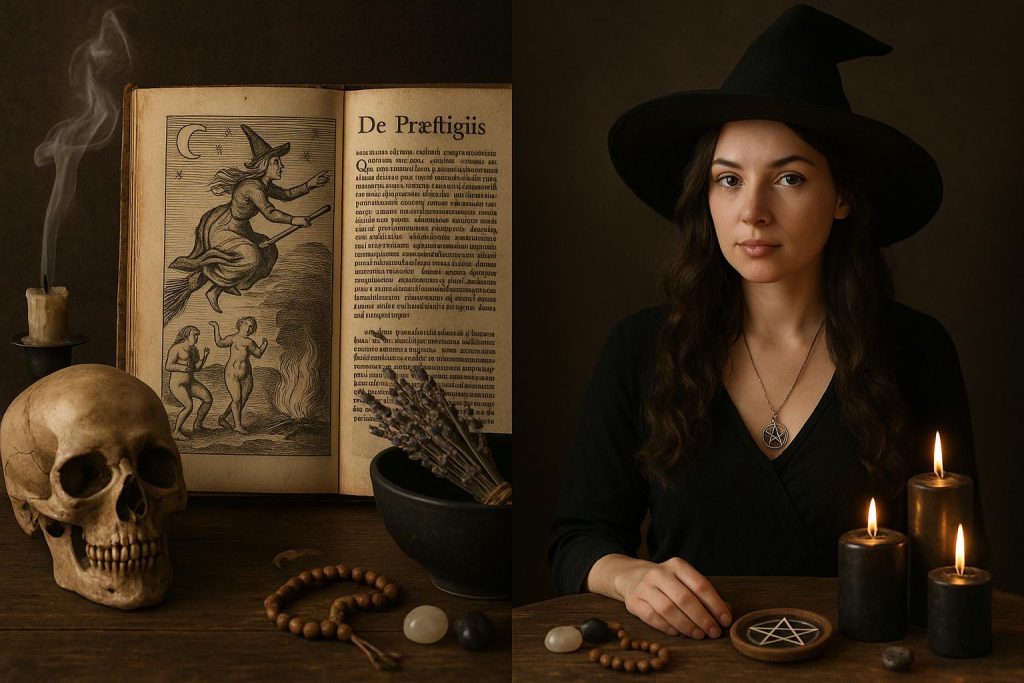
Understanding the Origins of Witchcraft
The concept of witchcraft has evolved significantly over centuries, intertwined with cultural beliefs and societal changes. Witchcraft is often understood as the practice of magical skills, spells, and abilities, and has its earliest origins in the ancient and medieval eras. During these times, individuals believed to possess such abilities were often both feared and revered. This complex interplay of societal attitudes and cultural practices has led to a rich, multifaceted history of witchcraft that is worth exploring in more detail.
Early Historical Context
In ancient civilizations such as Egypt, Babylon, and Greece, magical practices were an accepted part of life. Some practitioners were respected members of society, often serving as healers or spiritual guides. These early forms of witchcraft intertwined with religious and medicinal practices, embedding themselves deeply in the culture. They were seen not just as wielders of mysterious forces but also as individuals who could bridge the gap between the human and the divine.
The practitioners of magic engaged in activities such as healing the sick, predicting the future, and crafting protective amulets. These activities were often regarded as extensions of religious rituals rather than a separate, sinister profession. This perception illustrates how deeply embedded these practices were in the cultural psyche of ancient societies, setting the stage for the varied interpretations that would follow.
The Medieval European Perception
The image of witchcraft took a dark turn during medieval times in Europe. The Christian Church, particularly from the 13th century onwards, began to view witchcraft as heretical. This perspective stemmed from a growing concern with orthodoxy and the influence of non-Christian beliefs within the population. As a result, those believed to practice witchcraft were often accused of consorting with malevolent beings and using their powers for evil purposes.
This perspective led to the infamous witch hunts, which peaked between the 15th and 18th centuries. Many individuals, mostly women, were accused of witchcraft and faced severe penalties, including execution. The witch hunts not only reflected religious anxieties but were also used as tools of social control, enabling the systematic persecution of individuals who challenged societal norms or posed a threat to established power structures.
The Enlightenment and Decline of Persecution
During the Enlightenment in the 18th century, the hysteria surrounding witches began to decline as rationalism and scientific thought gained prominence. The Enlightenment heralded a period where reason and empirical evidence took precedence over superstition and fear. As such, the rise of skepticism towards old beliefs saw the decrease in witch hunts and executions. However, it is important to note that local superstitions persisted, and while the large-scale persecutions diminished, belief in witchcraft did not vanish entirely.
This era marked a pivotal shift in perception, as thinkers and philosophers began to question the validity of witch trials and the broader societal impact of such practices. The declining momentum of witch hunts during this time was indicative of broader cultural shifts towards a more secular worldview.
The Modern Revival of Witchcraft
In contemporary times, witchcraft has experienced a notable revival, especially from the mid-20th century onwards. This resurgence is marked by a shift in focus from the malevolent stereotype to a more positive interpretation. Modern witchcraft is often associated with personal empowerment, spiritual exploration, and a reconnection with nature.
Wicca and Contemporary Witchcraft Movements
The modern revival is perhaps most visible in the form of Wicca, a neo-pagan religion founded in the early 20th century. Wicca emphasizes the worship of nature and the practice of ceremonial magic. It seeks to empower individuals through a spiritual connection to the earth, breaking away from the negative connotations historically associated with witchcraft. Followers of Wicca often celebrate the cycles of the moon and the changing seasons, embracing rituals that honor the natural world.
Contemporary witchcraft movements are diverse, with practices and beliefs that vary widely between different traditions. Some focus on solitary practice, while others form covens or communities that gather for collective rituals. This diversity reflects the broader acceptance of spirituality in modern society, where many individuals seek personalized approaches to spirituality that resonate with their own beliefs and experiences.
Impact of Popular Culture
Popular culture has played a significant role in transforming the public perception of witchcraft. Movies, books, and television shows have romanticized and reimagined witches, often portraying them as powerful, independent figures. This new image has contributed significantly to the increase in individuals identifying as witches or engaging in witchcraft today. Far from being perceived solely as practitioners of dark arts, modern witches are often seen as figures of wisdom and strength, reflecting broader societal values.
The influence of popular culture in redefining witchcraft cannot be overstated. From the enchanting witches in movies who solve mysteries and fight evil, to literary works that delve deeply into the character and motivations of witches, the narrative has shifted from one of fear and suspicion to one of curiosity and admiration.
Witchcraft and Feminism
The revival of witchcraft is also linked to feminist movements, as it often embodies ideals of female empowerment, autonomy, and rebellion against patriarchal structures. The image of the witch has become a symbol of resistance for many, aligning with feminist ideologies. Throughout history, the figure of the witch has been used to control and suppress women, but in modern times, this image has been reclaimed as a representation of strength and independence.
Many women have found in witchcraft the tools and symbols necessary to challenge traditional gender roles, using it as a means to express individuality and defy societal expectations. Feminism and witchcraft intersect in their shared emphasis on empowerment, challenging oppression, and forging new paths for self-expression.
Conclusion
From its ancient roots to the witch hunts of medieval Europe, and now its modern resurgence, the history of witchcraft reflects a complex interplay of fear, misunderstanding, empowerment, and cultural evolution. Today, witchcraft is embraced by many as a legitimate spiritual path, reflecting a broader trend toward spiritual diversity and acceptance. Exploring witchcraft’s history and its modern revival offers insight into human culture and the ongoing redefinition of spirituality and belief systems.
The resilience and adaptability of witchcraft as a cultural and spiritual phenomenon speak volumes about human nature’s desire to connect with forces beyond the ordinary. Whether through scholarly examination or personal exploration, the topic continues to captivate and inspire, revealing much about the societies that have shaped—and been shaped by—the idea of witchcraft. For further reading on the transformation of witchcraft over the centuries, consider exploring this detailed source from a trusted publication.