
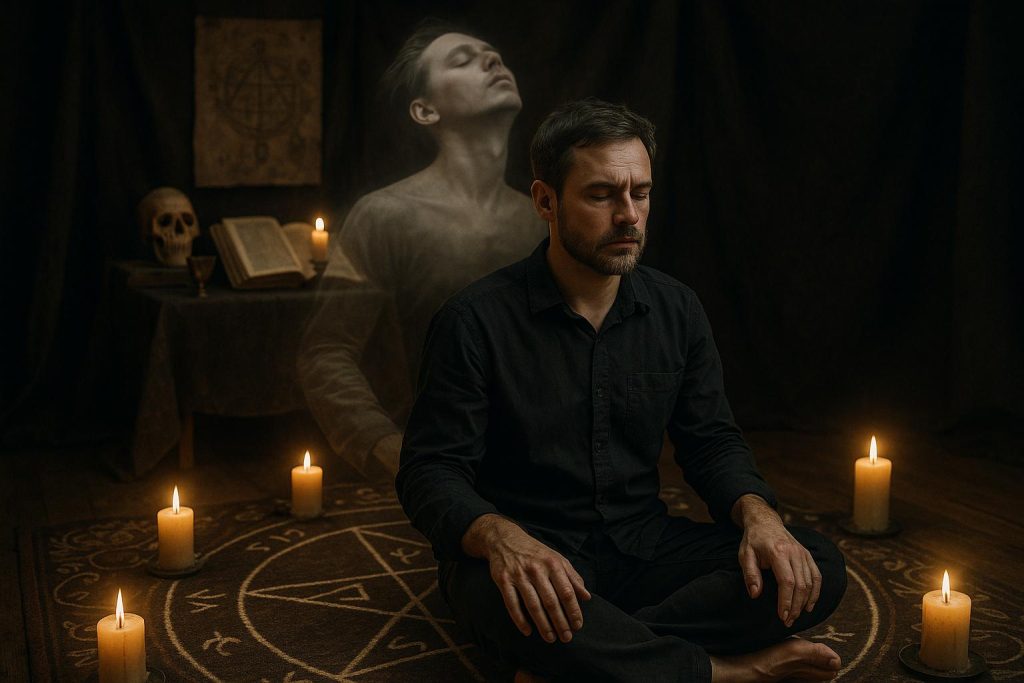
Understanding Astral Projection
Astral projection, an intriguing phenomenon frequently linked with various occult traditions, entails the concept where a person’s consciousness is claimed to detach from the physical body, allowing it to explore an astral plane. Proponents believe it provides unique insights and experiences transcending the physical realm. This idea has been chronicled across numerous cultures and spiritual traditions worldwide, reflecting its longstanding presence in human history.
Historical Context
Origins and Influences
The concept of astral projection can be traced back to diverse ancient traditions. Notably, ancient Egyptian beliefs held that the Ba, or soul, could venture beyond the physical form, offering an early glimpse into what might be likened to astral travel. Similarly, in Hinduism, the notion of the atma, or soul, embarking on journeys during profound meditation shares notable similarities with the concept of astral projection. Furthermore, shamanistic practices among various indigenous communities often involve journeys into spiritual realms, aligning closely with astral experiences.
Shaping Cultural Narratives
Throughout history, these ideas have been woven into the cultural and spiritual narratives of countless societies. Whether in the spiritual ascension practices of ancient Egypt, the meditative disciplines of Indian yogis, or the shamanic traditions of indigenous peoples, the essence of astral travel has served as a bridge between the earthly and the ethereal, creating pathways to worlds unknown.
Different Belief Systems
Theosophy: The late 19th-century saw a revival and mainstream exposure to the concept of astral projection, particularly in Western societies, through the efforts of the Theosophical Society. Founded by Helena Blavatsky, the society introduced Western audiences to myriad Eastern mystical traditions. Theosophy delineates seven planes of existence, identifying the astral plane as a crucial bridge between material and spiritual worlds. For theosophists, astral travel was not merely a fascination but a pivotal practice for spiritual evolution.
Sufism: Certain Sufi mystics within Islam interpret spiritual states encountered during deep meditation or trance-like states as experiences akin to astral projection. Sufi teachings often emphasize transcending the ego to unite with the divine, describing journeys not unlike those found in other mystical traditions. Such travels into spiritual domains are considered paths to divine secrets and self-awareness, providing practitioners with profound spiritual insights.
Kabbalah: Jewish mysticism, particularly Kabbalah, also addresses experiences similar to astral travel. The Sephirot, representing paths between divine emanations, are not only a guide for understanding the universe’s structure; for some, they also metaphorically describe a journey through spiritual planes. Here, astral experiences are seen as traversing these spiritual trees, connecting the earthly with the divine.
Mechanics of Astral Projection
Achieving Astral Projection
Astral projection is thought to commence with entering a deep meditative state. This phase demands heightened awareness of one’s internal energy flow and consciousness. Practitioners often report a sensation resembling vibrations or feelings of disassociation from the physical body before entering the astral plane. This prelude to astral travel is described as a subtle, often nuanced process, developing into what some perceive as a full-fledged out-of-body experience.
Subjective Nature and Evidence
Despite the vivid descriptions provided by those who claim to have ventured into astral planes, empirical scientific validation for astral projection remains elusive. The experiences lack measurable evidence through conventional scientific means, leaving the practice entrenched in personal experiences and anecdotal reports. Nonetheless, this does little to diminish the conviction or depth of experiences shared by practitioners who assert the authenticity of their astral journeys.
Reported Experiences
Common Themes and Discoveries
Participants in astral projection recall diverse encounters ranging from interactions with spiritual entities, exploration of diverse and often surreal landscapes, to revelations concerning their personal lives or life’s overarching purpose. These experiences, while deeply individual, often adhere to commonalities like themes of profound self-discovery and spiritual enlightenment. Often, the narratives shared by those who have ventured into the astral plane intertwine these themes, building a tapestry of personal growth and expanded consciousness.
Meaning and Personal Growth
Such astral experiences can be interpreted as metaphorical journeys leading to personal and spiritual refinement. They signify not just travels beyond our typical perceptions but also explorations within, allowing practitioners to access new layers of understanding regarding themselves and their broader reality.
Practical Considerations
Creating the Atmosphere
Those attempting astral projection often emphasize the significance of establishing a conducive environment. Creating a serene and comfortable space is paramount. Practitioners advocate for a quiet and meditative setting where they can fully concentrate without interruptions. Engaging in techniques like visualization or disciplined breathing are also instrumental in facilitating an effective astral projection experience. These steps help prepare the mind and body for the journey, aligning one’s mental state with the intended astral exploration.
Potential Risks
Skeptical Perspectives
From a skeptical standpoint, astral projection is seen as a largely subjective phenomenon. Critics argue that without scientific substantiation, the experiences are cluttered with personal bias and potential self-deception. There is an underlying concern that what is perceived as astral travel might lead individuals into states of delusion or contribute to unwarranted mystical beliefs.
Approaching with Caution
It becomes imperative for individuals considering astral projection to maintain a balanced approach, recognizing both its potential rewards and the subjective nature of the experience. An informed understanding and cautious mindset are crucial, ensuring the practice remains enriching without veering into potential psychological pitfalls.
Conclusion
While astral projection remains a captivating subject, its validity straddles the line between personal belief and spiritual practice. The absence of empirical backing does little to deter its continued allure or practice across cultural boundaries. It stands as a testament to humanity’s perpetual quest for transcendence and connection to realms beyond the physical. For those keen on deeper exploration, a wealth of resources is available that delve into the intricate history, philosophy, and cultural context surrounding this enigmatic practice.