
Understanding Wicca
Wicca is a contemporary pagan religious movement that emerged in the mid-20th century. It is often associated with the practices of witchcraft, but it’s important to note that Wicca is a distinct belief system with its own set of principles and rituals. The religion honors nature and emphasizes the reverence of a divine force often represented as both a god and a goddess. Wicca encourages individual spiritual experience, and its practitioners, known as Wiccans, engage in rituals that celebrate seasonal cycles known as Sabbats and work with specific energies through spells and meditations.
The Historical Context of Wicca
The origins of Wicca can be traced back to the early 20th century, although its roots draw upon much older pagan traditions. Wicca was popularized by figures such as Gerald Gardner, who is often regarded as the founder of modern Wicca. Gardner’s writings in the mid-20th century helped to define Wicca’s contemporary principles, which sought to revive and modernize ancient pagan practices. Wicca was introduced as a movement that celebrated nature and revered a divine presence that operates through both male and female energies.
Wiccan Beliefs and Practices
Wiccans adhere to a range of beliefs and practices that vary somewhat between different traditions. Despite this diversity, several core concepts are commonly observed:
Nature and the Divine: At the heart of Wiccan belief is the worship of nature, viewed as a sacred entity. Wiccans often see divinity as immanent in the natural world and its cycles, with the divine often articulated as a duality of god and goddess. These deities are sometimes considered as archetypes or representations of universal forces at play in the natural world.
Sabbats and Esbats: The Wiccan calendar features seasonal festivals known as Sabbats, which align with solstices, equinoxes, and other points of significance in the agricultural year. These include celebrations like Samhain, Beltane, and Yule, which honor the cycles of nature. Additionally, many Wiccans observe Esbats, which are rituals held in accordance with the phases of the moon, especially full moons.
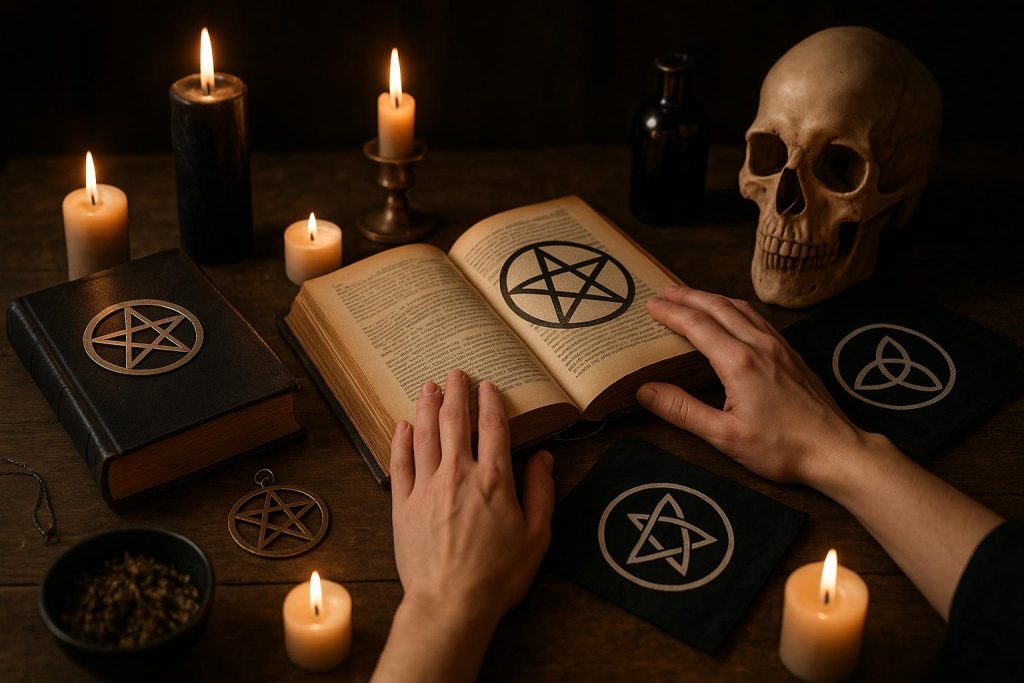
Personal Practice: Wicca emphasizes personal spiritual experience alongside communal ceremonies. Many Wiccans engage in meditations, spellwork, and ritual practices that are personally meaningful, utilizing tools like altars, candles, and incantations that hold symbolic significance. The practice of magic in Wicca—often referred to as the Craft—is centered on manifesting positive outcomes and achieving harmony with nature.
The Occult and Its Place in Wicca
The term occult refers to knowledge of the hidden or the practice of using supernatural influences or energies to achieve certain outcomes. Traditionally, this encompasses a broad range of activities, including alchemy, astrology, tarot reading, and divination. The relationship between Wicca and the occult is complex, yet they often intersect.
While not all occult practices are part of Wicca, many Wiccans incorporate certain occult practices into their personal spiritual routines. For example, a number of Wiccans use tarot cards for divination or work with crystals for their purported energetic properties. The incorporation of these practices into Wiccan traditions is generally seen in a framework that seeks personal and spiritual growth.
Misconceptions About Wicca and the Occult
It’s essential to address common misconceptions regarding Wicca and its association with the occult. One prevalent misconception is the belief that all Wiccans engage in occult practices with negative connotations. In truth, Wicca is a faith that fundamentally embraces positive, constructive, and life-affirming beliefs. The use of occult techniques within Wicca is typically geared towards personal development rather than any harmful intent.
Cultural Representation and Misunderstandings
Over the years, Wicca has frequently been misunderstood or misrepresented in popular culture and media. Films and books often depict witches and Wiccans with an emphasis on the supernatural, leading to misconceptions about the lifestyle and beliefs of actual Wiccans. These portrayals can sometimes emphasize themes of malice or malevolence, which are contrary to the foundational principles espoused by Wiccan traditions.
Education and dialogue are crucial in dispelling these myths and fostering a more accurate understanding of Wicca. By acknowledging and appreciating the rich history and diversity within Wiccan practice, individuals outside of the faith can gain insight into its true nature as a peaceful and nature-revering spiritual path.
Wiccan Ethics and Occult Practices
Wiccans typically adhere to certain ethical guidelines, such as the Wiccan Rede, which advises that practitioners should “harm none.” This principle extends to the use of occult practices within Wicca. The ethical conduct expected within Wiccan traditions often limits the types of occult practices engaged in, excluding those that might exploit or harm others.
The Threefold Law is another ethical concept embraced by many Wiccans. It posits that whatever energy a person puts into the world—be it positive or negative—will be returned to them threefold. This serves as a guiding principle that encourages adherents to act with kindness and consideration in their magical and mundane endeavors.
Community and Solitary Practice
Wiccan practice can take many forms, ranging from participation in covens—a group of practitioners who meet regularly for religious observance and ritual—to solitary practice, in which individuals follow Wiccan traditions independently. Both forms of practice are respected within the Wiccan community and are seen as valid avenues for spiritual exploration and expression.
Covens often provide a sense of community, shared learning, and collective ritual practice, while solitary Wiccans may find a deeper personal connection through private meditation, study, and ritual. Each path offers unique opportunities for spiritual growth and reflection.
Exploring Further
For those interested in exploring the intersection between Wicca and the occult further, it can be valuable to seek out primary sources written by practicing Wiccans or academic texts on contemporary paganism. Engaging with a local Wiccan community or joining online forums can also provide more nuanced understandings of how different individuals incorporate occult aspects into their spiritual practices.
For additional information on occult practices, consider resources such as the Lucis Trust or the Internet Sacred Text Archive.
While the path of Wicca and its associated practices may not resonate with everyone, it offers those who engage with it an opportunity to connect with nature, celebrate the cycles of life, and deepen their personal understanding of spirituality. By approaching Wicca with an open mind, one can appreciate its role as a rich and dynamic expression of contemporary pagan faith.