
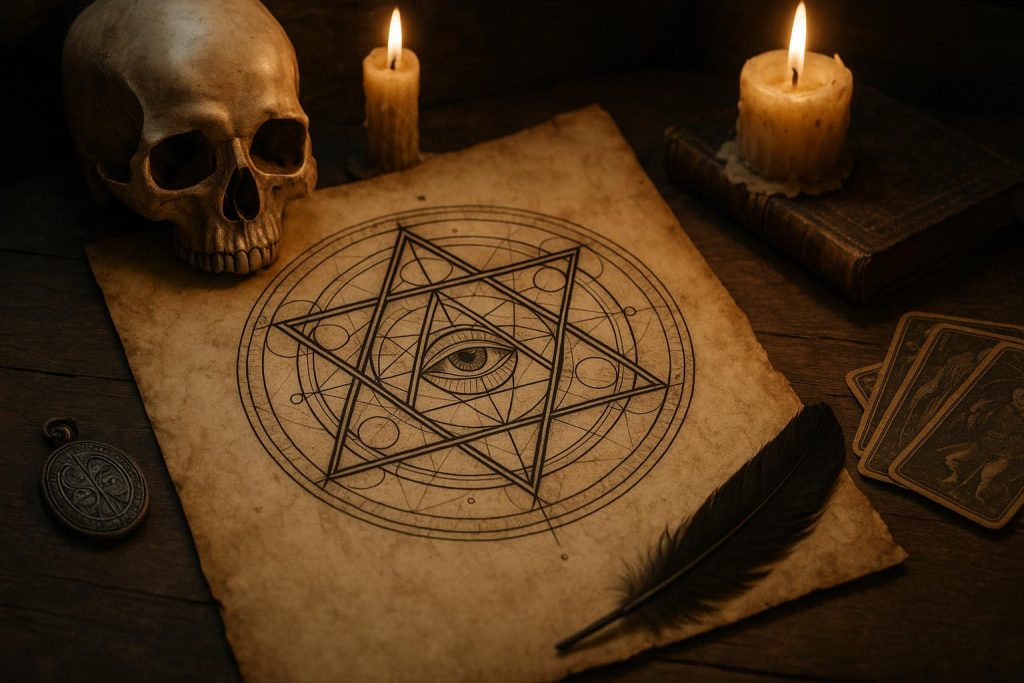
The Role of Sacred Geometry in the Occult
Sacred geometry has long held a place in various spiritual and mystical traditions, often forming a core component of occult practices. The term refers to geometric shapes and patterns that are considered to have spiritual significance. The use of these geometric forms can be traced back through history, appearing in ancient architecture, religious art, and esoteric symbology.
Understanding Sacred Geometry
Sacred geometry involves the study and utilization of geometric figures like circles, squares, and triangles, each of which is imbued with specific symbolic meanings. These shapes are thought to represent the fundamental structures of the universe and are used to convey complex ideas in a simple and universally understandable format.
Historical Context
Throughout history, various cultures have used sacred geometry to design sacred spaces, such as temples and monuments. The ancient Egyptians, Greeks, and Hindus incorporated these principles into their architecture and religious artworks, believing that these designs could facilitate a closer connection to the divine.
Symbols and Their Significance
The most commonly recognized symbols in sacred geometry include:
The Flower of Life: This pattern is comprised of multiple evenly-spaced, overlapping circles that form a flower-like pattern. It is considered to possess deep spiritual meaning and is often associated with the creation and interconnectedness of all life.
The Fibonacci Sequence: Based on a series of numbers, this sequence is often found in nature and is seen as representing the harmony and balance of the cosmos.
The Metatron’s Cube: This figure contains all five Platonic solids within it and is believed to be a blueprint for the universe, symbolizing unity and the harmony of creation.
Practical Uses in the Occult
In the realm of the occult, practitioners often use sacred geometry to harness energy, create protective boundaries, and gain insights into the natural and spiritual worlds. Ritual tools and altars may be arranged in geometric patterns to amplify the desired effects of spells or meditations. Additionally, these symbols can be used in visualization techniques to focus and direct energy effectively.
Broader Discourse and Applications
Expanding beyond the classical understanding, sacred geometry finds applications in various modern fields that intersect with both the scientific and mystical. Within the new age spiritualist communities, there is a strong belief that sacred geometry can aid in spiritual growth. This belief is supported by practices such as meditation with geometric forms, visualization techniques using sacred symbols, and even the integration of these designs into living spaces to influence environmental energy.
Modern Interpretations
In contemporary spirituality, sacred geometry is often seen not only as an ancient practice but also as a bridge to quantum understanding. Proponents suggest that these patterns are the fabric of the cosmos itself, reflecting the underlying order in chaotic systems. This viewpoint finds resonance in certain scientific theories that explore the geometry of the universe.
Intersection with Science
Though primarily a spiritual and philosophical domain, the curiosities of sacred geometry overlap with scientific inquiries. Mathematicians and scientists have explored natural phenomena, discovering that many biological structures are obtained through the principles reminiscent of sacred geometry. For instance, the arrangement of leaves, the structure of crystals, and the configuration of certain molecules reflect inherent geometric patterns suggesting universal laws expressed through mathematics.
Art and Sacred Geometry
Artistic expressions have been another area where sacred geometry has left an indelible mark. Artists throughout history and in contemporary times have drawn inspiration from these timeless patterns. From the detailed mosaics of Islamic art employing geometric principles to the works of visionary artists who explore these concepts as a means of expression and understanding, geometry continues to influence aesthetic development. These artistic forms challenge perceptions and can often evoke a deeper reflection on one’s place within the universe’s grand design.
Integrating into Daily Practices
As individuals seek deeper connections with the universe, incorporating sacred geometry into daily life can offer a novel perspective. One might use geometric symbols for personal meditation, decoration, or even in mindful living practices. By contemplating these shapes, individuals can explore their own consciousness, seeking a sense of balance and order in personal chaos.
Expanding the Understanding
For more in-depth exploration of sacred geometry and its applications in the occult, consider visiting specialized resources or attending workshops offered by experts in the field. By engaging deeply with these concepts, one can gain a greater understanding of the universe’s mysteries.
For further reading on sacred geometry, consider exploring resources beyond traditional academic texts. Engaging with forums or communities that specialize in the occult may provide additional insights and practical guidance on how to incorporate these principles into a personal practice. Consider visiting specialized websites dedicated to the study and application of sacred geometry in modern spirituality.
Final Considerations
While the study of sacred geometry is quite expansive, its essential core remains: the understanding of geometric forms as bridges to greater universal truths. Whether one approaches it from a scientific, philosophical, or mystical angle, the patterns and shapes of sacred geometry serve as a constant reminder of the underlying order amidst the apparent randomness of life. As practitioners and scholars continue to investigate its mysteries, the knowledge gathered can offer profound insights into not only the world around us but also the internal landscapes of the human experience. Sacred geometry, therefore, remains a pivotal area of interest for those seeking a more profound connection with the world, and perhaps, the universe beyond.