
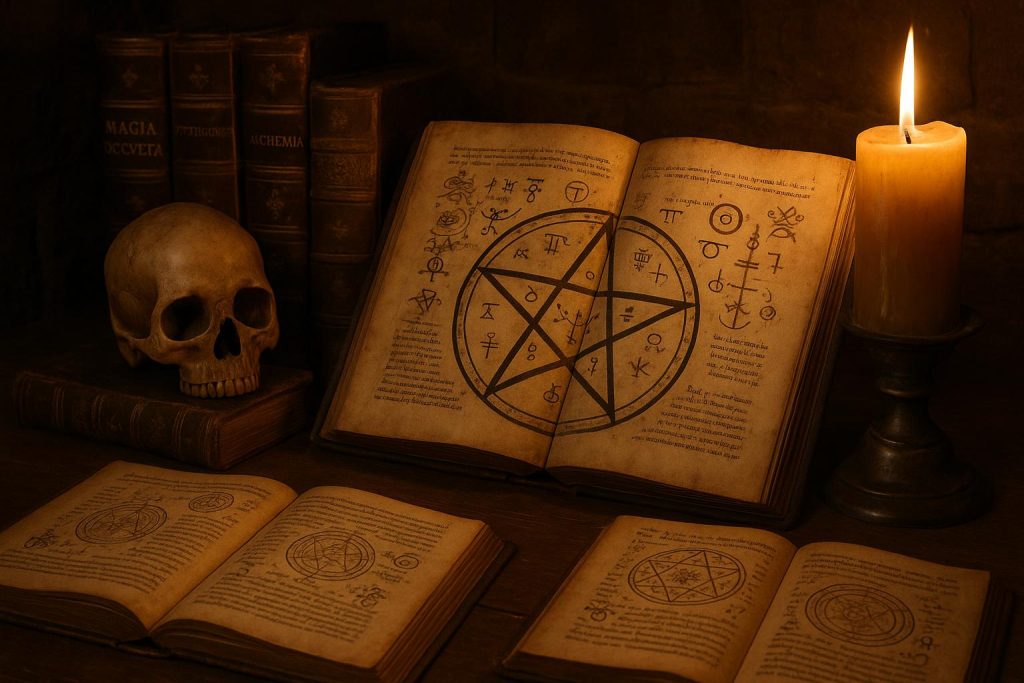
The Origins of Occult Practices in Western Traditions
The history of the occult in Western traditions is an intricate tapestry woven with mysticism, secret societies, and esoteric philosophies. Its roots can be traced back to ancient civilizations that flourished around the Mediterranean basin. The term “occult,” derived from the Latin word occultus, means hidden or secret, and it is typically associated with knowledge and practices considered arcane.
Ancient Civilizations and Mysticism
Ancient Egyptian and Greek cultures significantly influenced the early development of occult practices in the West. Egyptian mythology and rituals, especially those concerning the afterlife, left an indelible mark on various occult philosophies. For instance, the Egyptian Book of the Dead offers insights into the passage into the afterlife, a concept that resonates with many Western esoteric traditions. Similarly, Greek philosophers like Pythagoras and Plato explored metaphysical concepts such as the immortality of the soul and the existence of an ideal realm, which later formed the basis of Western esotericism.
During this time, the exchange of ideas between cultures was not uncommon, as the Mediterranean acted as a hub for philosophical and mystical knowledge. The Greeks absorbed influences from Egypt and the Middle East, leading to a fusion of thought that allowed for the emergence of new philosophical schools. Additionally, the Hellenistic period, which followed the conquests of Alexander the Great, further facilitated this exchange. It saw the rise of mystical schools that sought to synthesize Greek and Eastern philosophies. These schools laid the groundwork for the development of Gnosticism and Hermeticism, two dominant strands of thought in Western occultism.
Medieval and Renaissance Occultism
During the medieval period, the occult was intricately linked with alchemy, astrology, and the Kabbalah. These practices were often intertwined with the prevailing religious beliefs, despite the Church’s periodic denunciations. Alchemy, in particular, was not only a precursor to modern chemistry but also a spiritual discipline aiming for the transformation of the soul. Alchemists believed that the process of transforming base metals into noble ones mirrored an inner purification process, leading to spiritual enlightenment.
The Renaissance ushered in renewed interest in the occult, driven by a revival of classical knowledge and the rediscovery of ancient texts. The translation of the Corpus Hermeticum, a collection of mystical writings, into Latin heralded a fresh influx of esoteric ideas. Scholars like Marsilio Ficino and Giovanni Pico della Mirandola sought to reconcile Hermeticism and Platonism with Christian theology, influencing thinkers across Europe. Ficino’s translation of Plato captured the imagination of many scholars, leading to a fusion of Platonic and Christian thought.
Hermeticism and Rosicrucianism
Hermeticism, based on writings attributed to the mythical Hermes Trismegistus, gained prominence during this era. It emphasized the unity of all existence and the human potential for spiritual rebirth. Closely linked with Hermeticism, the Rosicrucian movement emerged in the 17th century, claiming esoteric knowledge and spiritual enlightenment. The Rosicrucians presented themselves as a mystical brotherhood united by the pursuit of wisdom and the betterment of society through spiritual and intellectual enlightenment.
Though shrouded in mystery, the Rosicrucians significantly influenced later occult organizations. Their manifestos, the Fama Fraternitatis and the Confessio Fraternitatis, called for a reformation of knowledge and were regarded as symbolic road maps to personal enlightenment. These documents, often considered a mixture of allegory and real events, stimulated curiosity and inspired secret societies dedicated to esoteric practices. For more information on Rosicrucianism and its impact, you can explore other reputable sources.
The Enlightenment and Rationalism
The 18th century was marked by the Enlightenment, a period characterized by an emphasis on reason and science. Despite the rise of rationalism, occult practices did not vanish but rather adapted, giving rise to new movements such as Mesmerism. Mesmerism, also known as animal magnetism, was developed by Franz Mesmer and was based on the idea that an invisible natural force could have physical effects on living beings. These movements continued to attract those seeking spiritual knowledge outside the conventional religious frameworks.
While many Enlightenment thinkers criticized the occult, they inadvertently contributed to its evolution by promoting ideas of the interconnectedness of nature and the human mind. This period also saw the publication and dissemination of many grimoires—books containing spells and instructions for magical practices. These texts retained interest among certain intellectual circles, illustrating the enduring fascination with the mysteries of the occult.
The Occult Revival and Modern Influence
The late 19th and early 20th centuries witnessed an occult revival, spurred by growing disenchantment with organized religion and scientific materialism. This period saw the rise of influential figures like Helena Blavatsky, who founded the Theosophical Society, advocating for a synthesis of science, religion, and philosophy. Blavatsky’s works, such as “The Secret Doctrine,” drew upon Eastern and Western esoteric traditions, fostering a global spiritual movement.
Another pivotal figure was Aleister Crowley, known for his development of Thelema, a spiritual philosophy that emphasized individual will and knowledge. Crowley’s eclectic approach combined elements of Eastern mysticism, Western magic, and his own unique insights, helping to shape modern esoteric practices.
The Golden Dawn, a secret society established in 1888, played a crucial role in shaping modern occult practices, blending Kabbalistic, Hermetic, and alchemical traditions. The society attracted notable members such as W.B. Yeats and influenced the work of many later occultists. Its structured rituals and teachings on magical theory provided a comprehensive framework for those interested in exploring the spiritual realm.
In modern times, the occult continues to fascinate, influencing literature, art, and popular culture. Its history in the Western tradition is a testament to humanity’s enduring quest for understanding beyond the surface of visible reality, continuing to inspire and challenge those who seek its hidden wisdom. The persistence and transformation of occult practices reflect humanity’s unending curiosity about the unknown and the desire to uncover the secrets of existence.
The exploration of the occult not only contributes to metaphysical and philosophical discourse but also highlights the varied ways that human societies grapple with the uncertainties and mysteries of life. Today, the continued interest in the occult underscores an ongoing appreciation of the mystic and the magical, and the ways these elements intersect with our understanding of the world. The blend of ancient wisdom and modern discovery ensures that the occult remains an area of intrigue and exploration, bridging the past with the present and connecting disparate cultural and philosophical threads across time.