
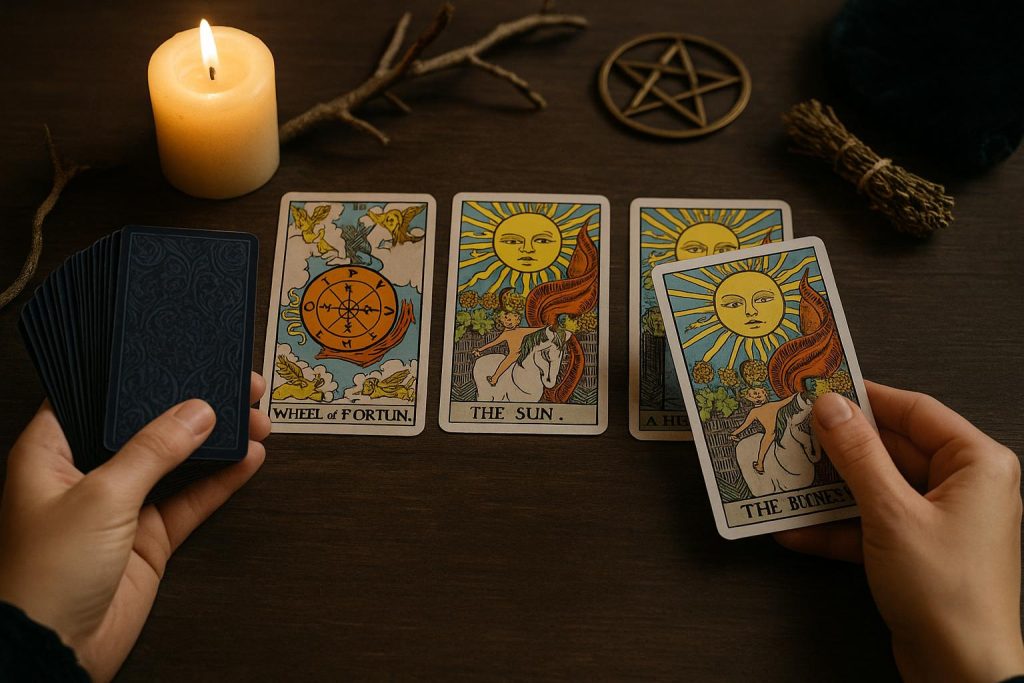
Understanding Tarot Cards in Wiccan Divination
Tarot cards have long been associated with various forms of divination, and they play a significant role within Wiccan practices. While tarot’s origins date back to Europe in the late 14th century, their utility in Wiccan rituals and personal insight has only grown over time. This document delves deeper into the structure of tarot decks, the significance of their components, and the role they play in Wiccan practices, providing a thorough understanding for both the intrigued novice and the seasoned practitioner.
The Structure of Tarot Decks
Traditional tarot decks typically consist of 78 cards, divided into two main sections: the Major Arcana and the Minor Arcana. These sections, each unique in their representation of life’s aspects, offer a comprehensive system for divination and self-reflection.
The Major Arcana consists of 22 cards that are crucial in the practice of tarot as they symbolize profound spiritual themes and pivotal life events. These are not simply images, but symbols bearing deep meaning and insight into the profound stages of personal development and universal truths. The importance of the Major Arcana is reflected in its role in forming the core elements of tarot readings and influencing the interpretation of other cards drawn alongside it.
On the other hand, the remaining 56 cards known as the Minor Arcana provide a more granular view of everyday life, further divided into four distinct suits. These suits—cups, swords, wands, and pentacles—each represent a different aspect of human experience, ranging from emotions, actions, conflicts, to material concerns. This duality between the Major and Minor Arcana allows the tarot deck to offer comprehensive guidance on a wide array of life’s questions and challenges.
Major Arcana
The Major Arcana cards, often seen as the heart of the tarot deck, encompass archetypal themes and essential life lessons. Key figures like The Fool, The Magician, and The High Priestess are more than mere characters; they serve as symbols for stages in the journey of life. Each card offers a realm of interpretation and insight, granting the querent a deeper look into the spiritual and mystical elements of their life path.
The Fool, often considered the first card in the Major Arcana, symbolizes new beginnings, innocence, and a journey into the unknown. It represents the start of a journey, urging individuals to embrace potential and welcome new experiences without preconceptions. The Magician follows, embodying transformation, resourcefulness, and the harnessing of one’s innate abilities to shape their reality. The High Priestess card invokes intuition and the subconscious, directing attention towards inner wisdom and the unseen forces at play in our lives.
The remaining cards within the Major Arcana continue this examination of life’s deeper meanings, presenting themes of balance, challenge, change, and enlightenment, each with its nuanced interpretations and implications.
Minor Arcana
Contrary to the Major, the Minor Arcana focus on the more tangible aspects of life through its four suits. Each suit delves into different facets of daily life, offering detailed advice and commentary that can be directly applied to personal decision-making and introspection.
The cups suit typically correlates with emotions and relationships, exploring the depth of human connection and the importance of emotional intelligence. The swords suit, meanwhile, is often connected with thoughts and conflict, reflecting challenges, decisions, and the trials of the mind. Wands relate to ambition, inspiration, and the pursuit of goals, reflecting our aspirations and the actions taken to achieve them. Pentacles, pertain to material and financial matters, emphasizing the physical aspects of existence and the importance of security and prosperity.
The Role of Tarot in Wiccan Practices
Within the Wicca religion, tarot cards function as a tool for introspection, guidance, and spiritual exploration. Practitioners may use tarot as part of their ritual work or during solitary meditation. The cards are not merely used for fortune-telling but also for gaining a deeper understanding of personal energies and the natural world.
In Wiccan practices, tarot sessions can be likened to sacred dialogue with the self and the universe, offering insights not just into future possibilities but deeper understanding of the current spiritual dynamics at play. The interplay between one’s personal energy and the broader cosmic rhythm is considered fundamental, and tarot cards help facilitate this connection. They can help Wiccans align with the rhythm of nature and the cycles of the moon, a central focus of Wiccan spirituality.
Using tarot in a ritualistic context may involve creating a sacred space, calling upon spiritual guides or deities for assistance, and using spreads that align with Wiccan themes or seasonal cycles. This integration of tarot with Wiccan rituals makes the practice a deeply personal and uniquely spiritual journey.
Furthermore, Wiccans may utilize tarot for more personalized meditations, employing singular cards as focal points for contemplation and spiritual work. This practice nurtures a profound self-awareness and encourages a harmonious relationship with the elements and energies both within and surrounding the individual.
For those interested in learning more about Wiccan customs and the use of tarot cards, many resources are available in books and online communities dedicated to exploring these mystical traditions. Extensive literature and vibrant communities provide guidance and shared knowledge, fostering an understanding of the intricate relationship between tarot and Wicca.