
The Significance of Rituals in Wiccan Spirituality
In Wiccan spirituality, rituals hold a significant place, serving as a medium for practitioners to connect with the divine and the natural world. These rituals are essential in expressing the themes central to Wicca, such as the cycles of nature, personal growth, and communal harmony. Let us delve deeper into the essential aspects of Wiccan rituals and their role in this spiritual tradition.
Understanding Wiccan Rituals
Wiccan rituals are more than simple ceremonial practices; there are profound spiritual acts embedded within each performance. At their core, these rituals commonly involve the creation of sacred space, calling upon deities, and performing specific symbolic actions intended to honor the vast cycles of life and the natural elements of earth, air, fire, and water. Essential to this process is the casting of the Circle, which serves as a sacred and protective space where the ritual takes place. Inside this Circle, Wiccans may often communicate with various deities that represent different aspects of nature, one such pair being the Goddess and the God.
The Purpose Behind Wiccan Rituals
The purposes served by Wiccan rituals are diverse and multifaceted. These rituals aim, among other things, at personal transformation and healing while also providing avenues for connection with the deities. Commonly, the rituals are synchronized with the rhythmic phases of the moon or the structured schedule of the Wheel of the Year. This Wheel marks Sabbats like Samhain and Beltane, each carrying its own significance. Every ritual is a unique blend of intention and tradition, crafted to harmonize the practitioner’s internal reality with the vastness of the external cosmos. This intentional alignment brings a spirit of presence and interconnectedness to the individual practicing Wicca.
The Elements and Tools in Wiccan Rituals
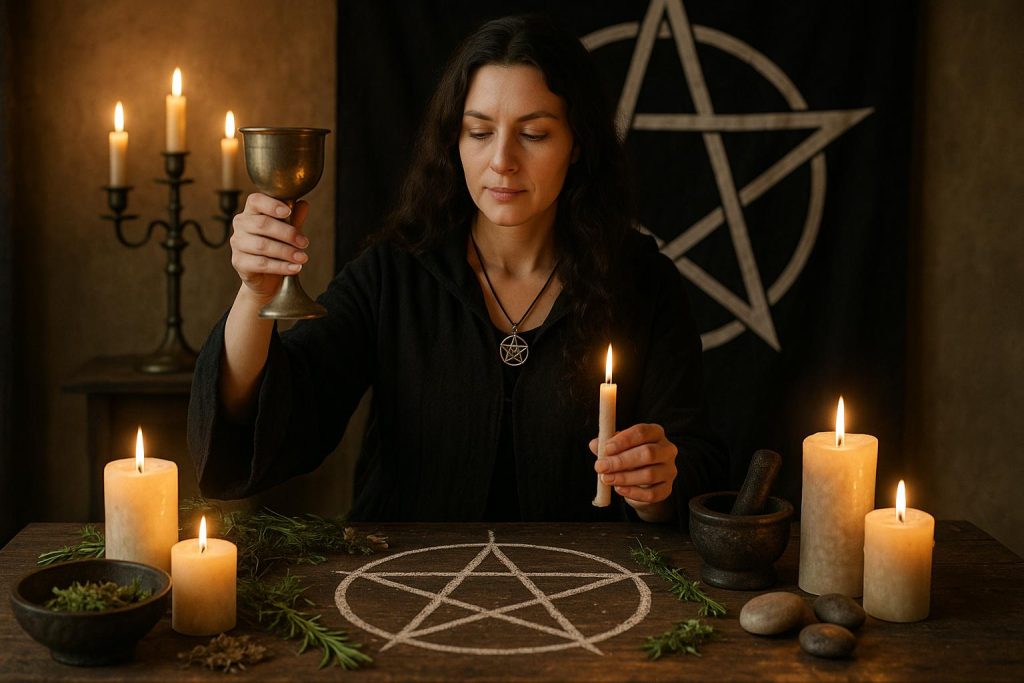
Integral to Wiccan rituals are the specific tools used by practitioners, each representing distinct elements and symbolic meanings. Common tools include the athame (ritual knife), chalice, wand, and pentacle. Each item, when employed, connects practitioners to the spiritual realm, enhancing their practice through its associations. For instance, the athame is principally linked with air and intellect, aiding in thoughtful decision-making and spiritual clarity. Meanwhile, the chalice, associated closely with water, resonates with emotions, providing emotional balance and harmony in spiritual endeavors. This symbiotic relationship between the tools and the elements allows for a holistic approach to Wiccan ritual practices.
Community and Solitary Practices
Wiccan rituals manifest in two primary forms: community-focused and solitary practices. When conducted in groups, known as covens, rituals provide participants with a communal sense of belonging while enhancing their spiritual experience through shared energy and united purpose. In contrast, solitary practitioners adapt rituals to fit their personal spiritual paths. Both approaches hold in high regard the importance of intention and personal empowerment over strict adherence to prescribed frameworks. Through individual or communal practices, Wiccan rituals offer valuable opportunities for deepening spiritual understanding and connections.
Modern Adaptations and Resources
With a quickly growing interest in Wicca, the availability and accessibility of resources have dramatically increased, providing essential guidance for both new and experienced practitioners. Workshops, online courses, and books now offer invaluable insights into crafting personal rituals while deepening understanding of foundational Wiccan principles. Those cultivating a deeper interest in Wiccan spirituality can explore a wealth of resources to gain comprehensive information and cultivate community support, greatly benefitting their personal and spiritual growth.
Wiccan rituals stand at the core of the spirituality, essential to its practice and evolution. Though continuously adapting to modern contexts and resources, these rituals have consistently preserved their integral role in enriching the spiritual lives of practitioners throughout the world.