
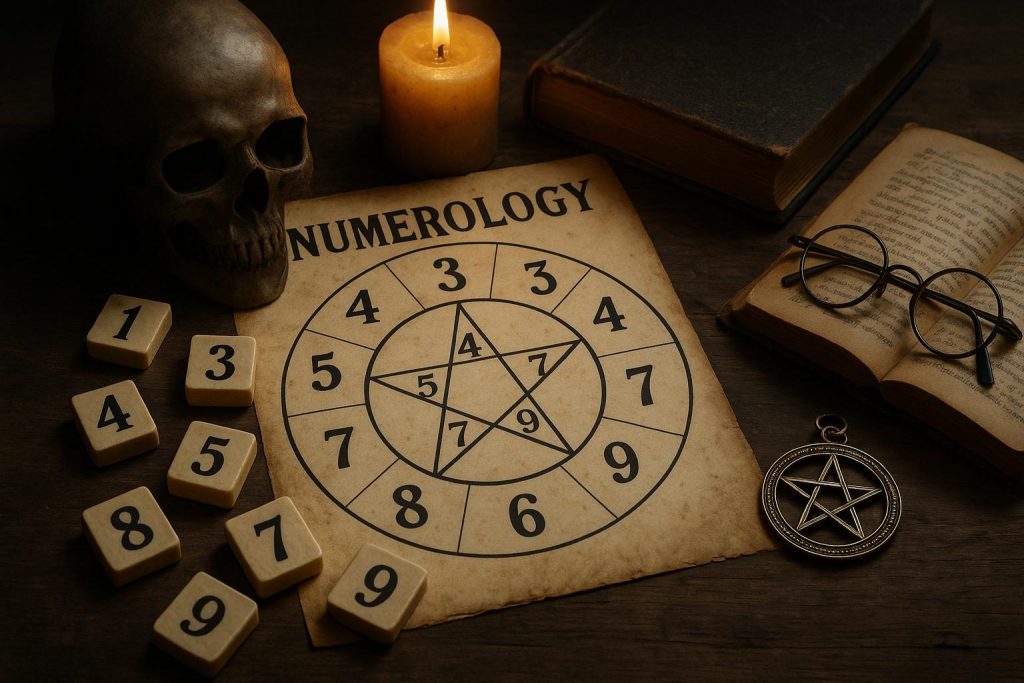
The Role of Numerology in the Occult
Numerology, a system that assigns mystical significance to numbers, plays a crucial role in various occult practices. While often associated with divinatory traditions, its influence extends to numerous realms of esoteric thought and belief.
The Historical Context of Numerology
Dating back to ancient civilizations, numerology has been an integral part of the human quest to understand the universe and its hidden meanings. Pythagoras, the Greek mathematician and philosopher, is frequently credited with developing foundational concepts in numerology. His belief that the world could be understood through numbers laid the groundwork for later numerological systems.
In the occult context, numerology’s application and interpretation have evolved over centuries. Its systems form part of a diverse range of practices, including astrology, alchemy, and tarot reading.
Numerology and Symbolism
Numbers in numerology are not simply quantitative markers; they also hold significant symbolic meanings. For example, the number seven is often associated with spiritual awakening and introspection, while the number four may symbolize stability and order. Such interpretations can vary widely depending on the specific numerological tradition or the practitioner’s personal beliefs.
This symbolic nature is why numerology often plays a critical role in rituals and ceremonial magic within the occult. Practitioners might choose ritual dates, times, or even words assigned to specific numbers that align with their desired outcomes or goals.
Numerology in Divination
In the realm of divination, numerology is used to gain insight into individuals’ lives, relationships, and potential future events. This practice often involves the analysis of birth dates, names, and other personal identifiers transformed into numbers.
Those numbers are then interpreted to provide guidance or understanding of life’s patterns and challenges. Despite its esoteric nature, numerology finds a dedicated following, illustrating its enduring relevance in the occult.
Numerology and the Occult Philosophy
The practice of numerology is deeply entwined with occult philosophies, which often regard the universe as imbued with hidden meanings accessible through esoteric knowledge. Numbers, from this perspective, are more than abstract truths; they serve as keys to unlocking the cosmic principles underlying material reality.
Occultists may use numerological analysis to reveal deeper truths about the universe, seeking alignment with these truths to enhance their spiritual growth or manifest particular outcomes. Consequently, the study of numerology is not only an intellectual pursuit but also a spiritual endeavor.
Numerology’s Intersection with Other Occult Practices
In many traditions, numerology intersects intimately with other occult practices. For example, in astrology, numbers derived from birth charts can offer additional insights into a person’s character and destiny. Astro-numerology combines these elements to provide a more layered understanding of an individual’s life journey.
Similarly, in tarot reading, numerological insights can amplify the meaning of particular tarot spreads. Each card is associated with a number, and understanding these numerological correspondences can enhance the reading and bring further depth to the interpretation of the spread. Thus, numerology complements and enriches the practice of reading tarot cards by offering an added analytical layer.
The Role of Numerology in Personal Development
Furthermore, beyond divination, numerology is often harnessed for personal development. Practitioners believe that by understanding their unique numerical makeup, they can uncover strengths and weaknesses, thus empowering them to make informed life choices. Life path numbers, derived from birth dates, are particularly emphasized for insights into one’s persona and life objectives.
Additionally, personal numerology can guide individuals in choosing suitable career paths, partners, and life goals. By resonating with their inherent numerical energies, individuals strive for a life of harmony and fulfillment, aligned with their numerical blueprint.
Challenges and Criticisms
Critics of numerology often cite its esoteric foundations as lacking empirical support or scientific validation. Despite this, its proponents argue that numerology offers a symbolic framework for understanding personal existence and universal interconnectedness.
The lack of empirical validation does not deter those who find value in its philosophical and spiritual insights. Numerology serves as a bridge connecting observed realities with metaphysical doctrines, offering an interpretative framework that continues to be an integral part of occult studies.
Numerology in Modern Times
In modern times, numerology retains its allure and relevance, especially as more people seek spiritual and alternative methods for self-discovery and understanding of the universe. Online resources and communities dedicated to numerology have proliferated, making it more accessible to a broader audience.
Digital platforms offer tools for generating numerological charts and reports, democratizing access to numerological insights and furthering its reach. As people increasingly explore numerology, its application continues to evolve, adapting to contemporary contexts while preserving its ancient wisdom.
Conclusion
The continuing popularity and application of numerology within the occult reflect a persistent human inclination to seek meaning beyond the tangible world. This ancient practice remains an enduring bridge between the known and the unknown, offering insights that intersect with spirituality, self-awareness, and cosmic understanding. For those interested in delving deeper into numerology’s role within the occult, numerous resources and texts are available. Exploring these can provide a richer understanding of how this ancient practice continues to influence modern esoteric traditions.