
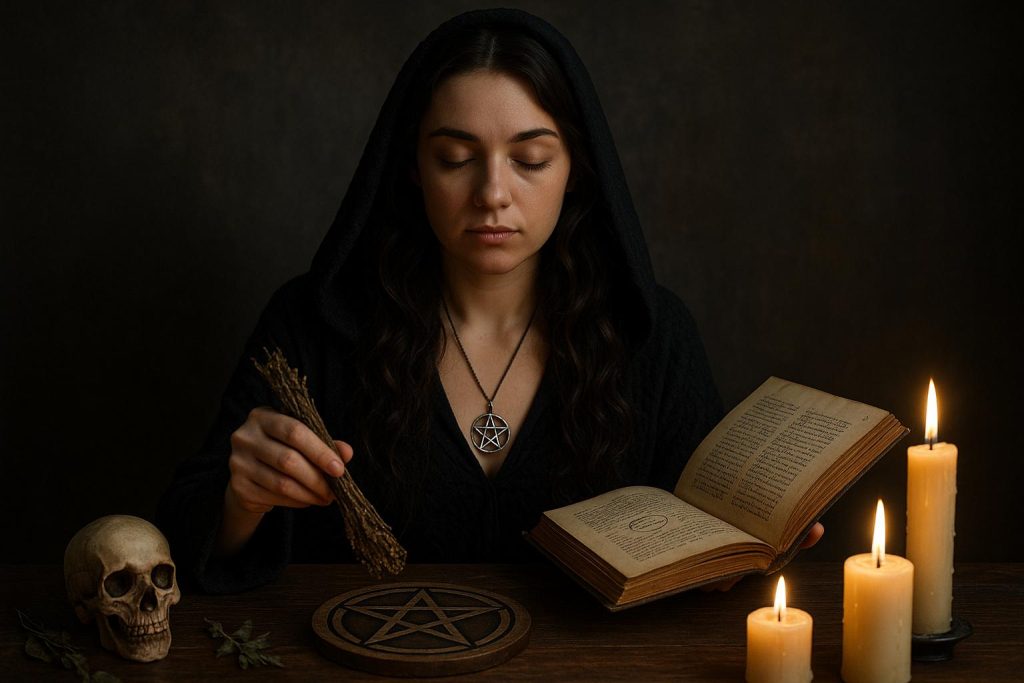
Understanding Wicca and Witchcraft
Wicca and witchcraft are often terms that are used interchangeably in everyday conversation, yet they denote distinct facets of spiritual and magical practices. Although there is a certain degree of overlap between these two concepts, each occupies a unique place in the context of historical and contemporary spiritual landscapes.
Wicca: A Modern Pagan Religion
Wicca stands as a modern pagan religion that emerged primarily in England during the mid-20th century. At its core, Wicca is a nature-based faith that places profound emphasis on the veneration of deities as well as the cyclical patterns of nature. This religion found a vocal proponent in Gerald Gardner. Gardner claimed initiation into a coven of witches and subsequently disseminated the practices he learned during the 1950s. Since Gardner’s time, Wicca has proliferated and evolved, splintering into a myriad of traditions and branches that reflect its dynamic nature.
Key Components of Wicca
Several foundational elements characterize the practice of Wicca:
1. **Worship of Deities**: Wiccans are known to honor both a goddess and a god, often identified as the Moon Goddess and the Horned God. The understanding of these deities varies among practitioners; some perceive them as symbolic representations, while others regard them as literal divine figures.
2. **Celebration of Nature**: An intrinsic aspect of Wicca is the celebration of nature’s cycles through festivals called Sabbats. These Sabbats correspond with the solstices, equinoxes, and the midpoints in between, deeply reflecting the practitioners’ connection to the natural world.
3. **Ritual Practices**: Rituals within Wicca serve multiple purposes, including the honoring of deities, acknowledging life transitions, and the execution of magical activities. The common elements of these rituals involve the casting of a sacred circle, invoking deities, and performing symbolic actions that hold significant meaning.
4. **Ethical Guidelines**: Central to Wiccan ethics is the Wiccan Rede, succinctly expressed as “An it harm none, do what ye will.” Coupled with this is the doctrine of the Threefold Law, which posits that the energy one puts out into the world will return to them threefold.
Witchcraft: A Broader Concept
In contrast, witchcraft is a term that encompasses a broader spectrum of activities, chiefly involving the application of magical skills and abilities. Importantly, witchcraft is not bound to any singular religion or system of beliefs, making it a practice that spans diverse cultures and epochs. The specific practices associated with witchcraft are highly variable, dependent on both cultural contexts and individual beliefs.
Practices in Witchcraft
The realm of witchcraft includes a variety of practices, such as:
– **Spell Casting**: Utilizing spells and incantations aims to bring about desired outcomes. These rituals can range from the straightforward to the intricate and often involve natural objects or symbols.
– **Herbalism**: This practice involves the use of plants and herbs for purposes that are either medicinal or magical in nature, recognizing the innate properties and energies within these natural elements.
– **Divination**: Techniques like tarot reading, scrying, or astrology are employed to glean insights into the future or uncover hidden facets of life.
– **Crafting Charms and Talismans**: This involves creating objects that are believed to be imbued with magical properties, intended for protection or to bring about particular benefits.
Interconnection and Distinctions
The relationship between Wicca and witchcraft is nuanced. Wicca is a defined religious path characterized by specific beliefs and structured practices, while witchcraft functions as an umbrella term that can assume both religious and secular forms. Many individuals who identify as Wiccans incorporate witchcraft into their religious practice, yet it’s critical to recognize that not all who practice witchcraft adhere to Wiccan beliefs. Witchcraft is inclusive of a diverse array of spiritual beliefs outside the confines of any single religious framework.
Clarifying Misconceptions
A key aspect of understanding Wicca and witchcraft lies in the recognition and correction of misconceptions, particularly the dichotomy between their real-life practice and the fictional depictions widely showcased in media. These often sensationalized portrayals contribute significantly to misunderstandings and the perpetuation of stereotypes regarding both Wicca and witchcraft. For those seeking a more grounded understanding, it is advisable to explore literature authored by practitioners and scholars who are intimately familiar with these traditions, offering accurate and nuanced perspectives.
In conclusion, despite their interrelation, Wicca and witchcraft embody two distinct pathways. Wicca is delineated as a religious tradition that may incorporate aspects of witchcraft, whereas witchcraft itself is a more expansive practice transcending the boundaries of any singular belief system. Cultivating a deeper understanding of these distinctions fosters an appreciation of the intricate interplay between religious traditions and the practice of magic. This nuanced comprehension is pivotal in respecting and valuing the diverse practices that contribute to the rich tapestry of spiritual expression across the globe.