
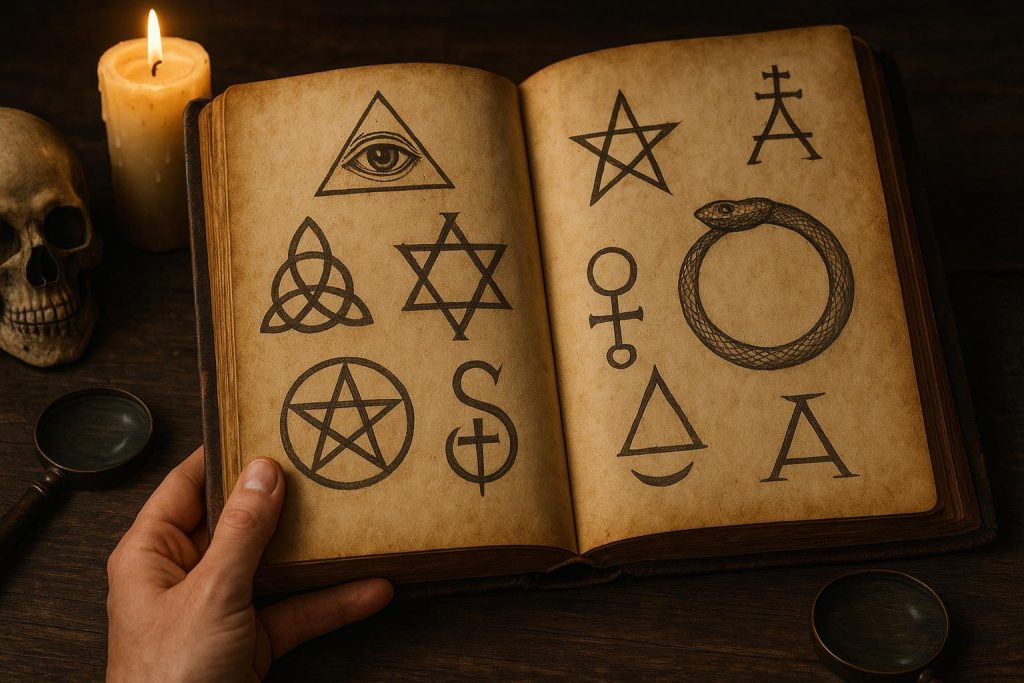
Introduction to Esoteric Symbols in the Occult
Esoteric symbols in the occult serve as a fascinating gateway into a realm where mystical concepts intertwine with spiritual significance. These symbols appear prominently in rituals, ancient texts, and various art forms, providing a visual language that conveys beliefs and practices not immediately apparent to the untrained eye. Understanding these symbols is a multifaceted endeavor that requires a blend of historical knowledge, cultural context, and personal interpretation, as each symbol carries a rich tapestry of meanings.
The Importance of Symbolism in the Occult
In the landscape of the occult, symbols function as the language of the subconscious, encapsulating vast ideas and arcane concepts. They frequently serve as symbolic keys designed to unlock deeper meanings for those who delve into their studies. One of the core reasons symbols hold a pivotal role in the occult is their ability to convey abstract and complex ideas that often elude verbal expression. These symbols offer a form of shorthand that transcends linguistic barriers, fostering communication on a spiritual plane.
A comprehensive understanding of esoteric symbols often uncovers multiple layers of meaning. For individuals invested in personal transformation, symbols serve not only as metaphors but as guides, facilitating a journey into self-awareness and enlightenment. By studying these symbols, individuals can access hidden aspects of their psyche and unveil insights that prompt profound spiritual growth.
Common Occult Symbols and Their Meanings
Occult symbols have appeared across cultures and epochs, serving as a bridge between the mundane and the divine. Their timeless appearance speaks to their integral role in human spirituality.
The Pentagram: Long associated with Wicca and various modern pagan traditions, the pentagram is revered as a sacred geometric form. Its five points represent the elements of earth, air, fire, water, and spirit. This configuration embodies the harmonious balance of nature. When encapsulated within a circle, the pentagram assumes an additional layer of protection and unity, symbolizing the cyclical nature of life and the universe.
The Ankh: This symbol, with its roots in ancient Egypt, is an enduring emblem of life and immortality. Resembling a cross with a loop at the top, the ankh is often depicted in the possession of gods and pharaohs, signifying divine favor and eternal life. In many esoteric traditions, the ankh is regarded as a key, opening the gates to the afterlife and a symbol of unification between male and female principles.
The Eye of Horus: Revered within Egyptian mythology, the Eye of Horus is emblematic of protection, sovereignty, and health. Often featured on amulets, the eye signifies watchfulness and a shield against evil. Its presence in rituals and its frequent depiction in art testify to its enduring significance.
Approaching Esoteric Symbolism
To discern the full essence of esoteric symbols, one must approach the subject with an open mind, prepared to engage with the kaleidoscope of interpretations these symbols inspire. The study of symbolism is inherently multi-faceted, and understanding comes from a willingness to explore how meanings transform across different cultures and historical periods.
Research: Attaining a nuanced understanding of esoteric symbols necessitates thorough research into their historical and cultural backdrops. Texts authored by practitioners and scholars can yield substantial insights and an appreciation for the symbols’ complex heritage.
Personal Reflection: Engaging in personal reflection or meditation can facilitate a profound connection to these symbols, unveiling their personal significance. By contemplating these symbols, individuals may receive insights unique to their personal journey, thereby enriching their spiritual experience.
Conclusion and Further Learning
The journey toward understanding esoteric symbols in the occult can be deeply rewarding. It requires a balanced integration of scholarly research and personal reflection. Despite established meanings, these symbols often acquire personal significance that may diverge from conventional interpretations. For those eager to explore the enigma of spiritual and mystical traditions, the study of occult symbols offers an enlightening pathway.
To continue your exploration, consider immersing yourself in resources and joining study groups with a focus on esoteric knowledge. Engaging with others who share an interest in the occult can open the door to diverse perspectives and interpretations, enhancing your understanding of this rich, symbolic language. For additional guidance, you might seek out communities and sources dedicated to ancient wisdom and contemporary interpretations of esoteric practices.